
Brain Development Foods for Kids: 15 Indian Options + When to Supplement
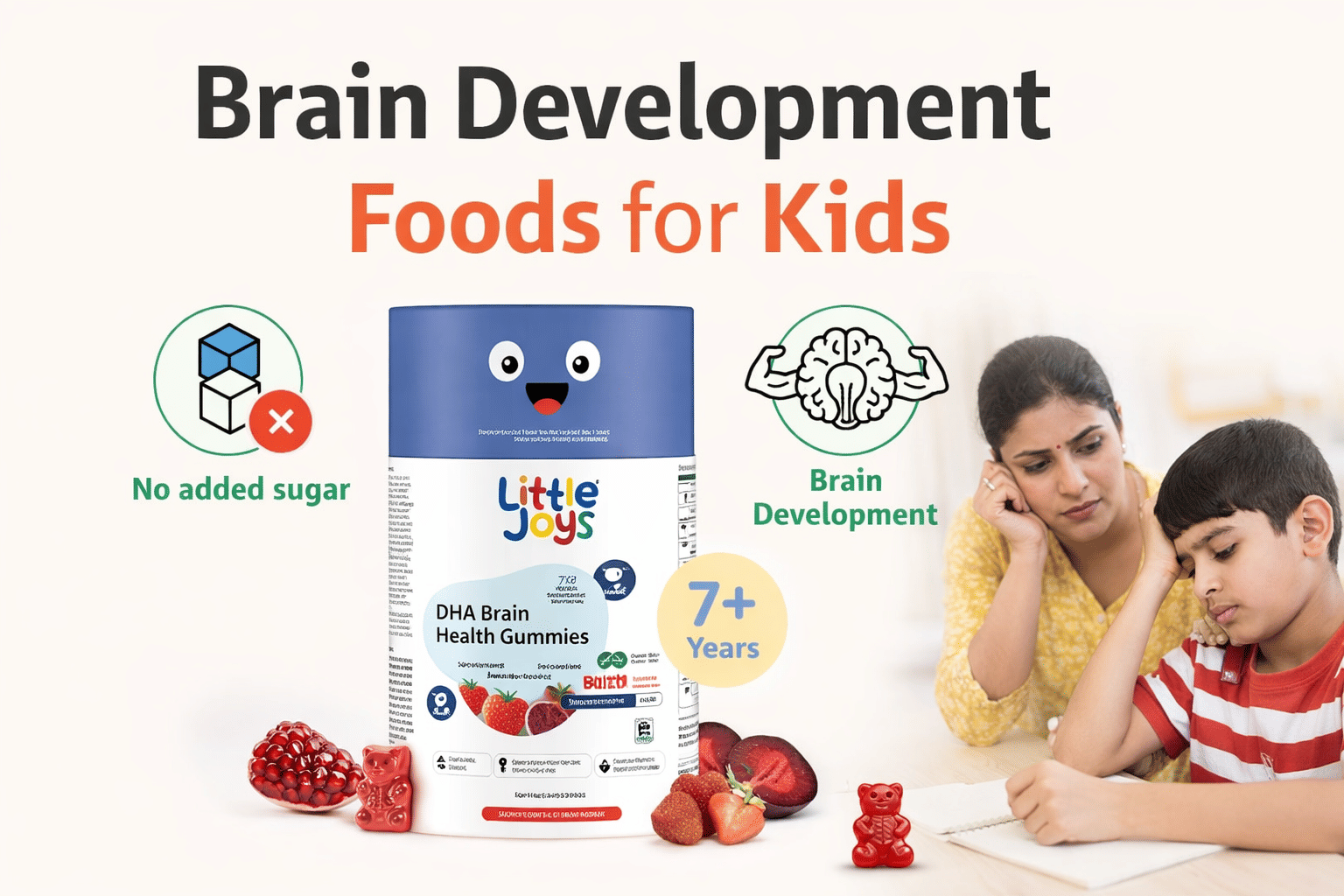
Brain development in kids requires omega-3 fatty acids, iron, zinc, B vitamins, and antioxidants. Top Indian foods include walnuts, eggs, ghee, dal, and fish. When dietary gaps exist, DHA supplements like Little Joys Brain Gummies provide targeted support for cognitive growth.
Introduction
"What can I feed my child to boost brain power?" Every parent wants to support their child's cognitive development-especially during critical growth years (0-12) when 90% of brain development occurs.
While no single "brain food" creates geniuses, certain nutrients genuinely support memory, concentration, and learning capacity. The good news? Many brain-boosting foods are Indian kitchen staples.
This guide identifies 15 brain-supporting foods readily available in India, explains the science behind each, and clarifies when supplementation with products like Little Joys Brain Gummies bridges dietary gaps-particularly for picky eaters or vegetarian families.
The Science - What Brain Development Needs
Essential Nutrients for Kids' Brain Development
Critical Nutrients and Their Roles:
1. Omega-3 Fatty Acids (DHA + EPA):
- Build brain cell membranes
- Support neuron communication
- Enhance memory and learning
- Deficiency impact: Poor concentration, learning difficulties
2. Iron:
- Oxygen transport to brain
- Neurotransmitter synthesis
- Deficiency impact: Cognitive delays, poor academic performance
- Indian context: 40% of kids under 5 are iron-deficient
3. Zinc:
- Memory formation
- Attention regulation
- Deficiency impact: Reduced focus, behavioral issues
4. B Vitamins (B6, B9, B12):
- Energy production in brain cells
- Mood regulation
- B12 particularly critical for vegetarian kids
5. Choline:
- Memory development
- Brain structure formation
- Peak need: Ages 0-5
6. Antioxidants (Vitamins C, E):
- Protect brain from oxidative stress
- Support long-term cognitive health
The Food-First Philosophy: These nutrients work synergistically when consumed through whole foods. Supplements like Little Joys Brain Gummies or DHA Gummies work best as gap-fillers, not primary sources-supporting kids who refuse brain-boosting foods or have dietary restrictions.
15 Brain-Boosting Indian Foods
Best Brain Foods for Kids Available in India
Omega-3 Rich Options:
1. Walnuts (Akhrot):
- Highest plant-based omega-3 (2.5g per 1/4 cup)
- Resembles brain structure-traditionally called "brain food" in India
- How to serve: Crushed in ladoos, smoothies, as snack
2. Flaxseeds (Alsi):
- Alpha-linolenic acid (plant omega-3)
- How to serve: Ground in parathas, mixed in curd
3. Fish (for non-vegetarians):
- Sardines, mackerel, hilsa-rich in DHA/EPA
- Frequency: 2-3 times weekly ideal
4. Chia Seeds:
- Omega-3 plus fiber
- How to serve: Chia pudding with mango
Iron-Rich Options:
5. Dark Leafy Greens (Palak, Methi):
- Iron plus folate for brain
- Pair with vitamin C (lemon) for absorption
6. Dal (All Lentils):
- Plant iron, protein, B vitamins
- Best combo: Rajma, moong, masoor mixed
7. Jaggery:
- Iron content supports oxygen to brain
- Use in: Gur wale chawal, til gur ladoo
8. Dates:
- Iron, natural sugars for quick energy
- How to serve: Date milkshakes, energy balls
Choline & B-Vitamin Sources:
9. Eggs:
- Choline powerhouse (147mg per egg)
- B12 for brain nerve health
- How to serve: Egg bhurji, boiled, omelets
10. Ghee:
- Healthy fats for brain structure
- Traditional brain tonic in Ayurveda
- Amount: 1-2 tsp daily in dal, rice
11. Milk & Curd:
- B12, calcium, protein
- Best for: Vegetarian kids' brain nutrition
Antioxidant-Rich:
12. Berries (Seasonal):
- Anthocyanins protect brain cells
- Alternatives: Jamun, local berries
13. Turmeric:
- Curcumin supports brain plasticity
- Use in: Haldi doodh, dal, vegetables
14. Pumpkin Seeds:
- Zinc, magnesium for memory
- How to serve: Roasted snack, in granola
15. Amla (Indian Gooseberry):
- Highest vitamin C source
- Enhances iron absorption, protects brain
- Use in: Amla murabba, pickle, juice
Building Brain-Boosting Meals:
- Breakfast: Egg paratha with ghee + amla juice
- Lunch: Dal-rice with palak, fish curry (non-veg)
- Snack: Walnut-date ladoo, chia pudding
- Dinner: Roti with methi sabzi, curd
When Food Isn't Enough
When Kids Need Brain Development Supplements
Situations Where Supplementation Helps:
1. Vegetarian/Vegan Diets:
- DHA/EPA primarily in fish-plant sources convert poorly
- B12 deficiency common in vegetarian kids
- Solution: DHA supplements from algae (Little Joys Brain Gummies use algal DHA)
2. Severe Picky Eating:
- Child refuses eggs, fish, nuts, greens for months
- Iron and omega-3 intake severely limited
- Gap-filling: Brain gummies provide concentrated nutrients
3. Academic Pressure:
- Ages 8-12 during intensive schooling
- Extra cognitive support during exams
- Targeted boost: DHA for memory, B vitamins for energy
4. Diagnosed Deficiencies:
- Blood tests show low iron, B12, or zinc
- Medical guidance for supplementation
- Complement with food improvements
What to Look for in Brain Supplements:
Essential Ingredients:
- DHA (100-250mg): From algae for vegetarians or fish oil
- Choline: Memory support
- Iron: If deficient (check with doctor first)
- B-Complex: Especially B12 for vegetarians
- Zinc: Attention and focus
Little Joys Brain Gummies Approach: Combines algal DHA (plant-based, no fishy taste) with vitamins supporting cognitive function-designed specifically for Indian kids who may not consume fish regularly. Jaggery-sweetened, refined sugar-free formulation.
DHA vs Regular Multivitamins: Regular multivitamins often lack DHA or include inadequate amounts. Specialized brain supplements provide therapeutic doses (150-200mg DHA) actually impacting cognitive function.
Realistic Timeline: Brain supplements aren't overnight solutions. Consistent use (3-6 months) alongside improved diet shows measurable benefits in concentration, memory retention, and academic performance.
Brain-Boosting Habits Beyond Food
Beyond Food: Complete Brain Development Strategy
Nutrition is only one piece:
1. Sleep Quality:
- Ages 4-6: 10 hours nightly
- Ages 7-12: 9-10 hours nightly
- Brain consolidates learning during sleep
2. Physical Activity:
- Increases brain blood flow
- Enhances memory formation
- Minimum: 60 minutes daily active play
3. Reading & Conversation:
- Builds neural pathways
- Enhances vocabulary, comprehension
- Daily: 20-30 minutes reading together
4. Limited Screen Time:
- Excessive screens reduce attention span
- AAP guidelines: Maximum 1-2 hours recreational screen daily
5. Stress Management:
- Chronic stress impairs memory
- Ensure playful, pressure-free childhood
Synergy: Brain-boosting foods + supplements (if needed) work best alongside healthy sleep, activity, and reduced stress. Little Joys supports the nutrition pillar while parents address lifestyle factors.
Age-Specific Brain Nutrition
Brain Nutrition by Age: What Kids Need When
Ages 0-2 (Critical Brain Growth):
- Focus: DHA from breastmilk or fortified formula
- First foods: Ghee, mashed dal, egg yolk
Ages 3-5 (Language Development):
- Focus: Iron, zinc, choline
- Foods: Eggs, dal, walnuts, milk
- Supplement: If vegetarian, consider DHA drops
Ages 6-8 (School Readiness):
- Focus: B vitamins, omega-3, iron
- Foods: Full variety from Section 2
- Supplement: Brain gummies if picky eater
Ages 9-12 (Academic Demands):
- Focus: Sustained energy, memory support
- Foods: Increased omega-3, adequate protein
- Supplement: DHA during exam periods
Common Questions About Brain Foods for Kids
Can brain foods make my child smarter?
They support reaching full cognitive potential but don't alter genetic intelligence. Adequate nutrition prevents deficiency-related cognitive problems and optimizes learning capacity.
How much omega-3 do kids need daily?
Ages 4-8: 70-90mg DHA. Ages 9-13: 100-120mg DHA. One serving of fatty fish provides this, or algal DHA supplements.
Are Little Joys Brain Gummies better than eating fish?
Food first is always ideal. Brain gummies bridge gaps for vegetarian kids or those refusing fish. They provide concentrated DHA (150mg per serving) in palatable form.
When will I see results from brain supplements?
Cognitive improvements are subtle. After 2-3 months of consistent use alongside good diet, parents report better focus, improved memory retention, and enhanced school performance.
Supporting Your Child's Brain Development
Brain development thrives on nutrient-rich whole foods-walnuts, eggs, dal, ghee, and greens readily available in Indian kitchens. Focus first on incorporating these 15 brain-boosting foods into daily meals.
When dietary gaps exist-especially for vegetarian families or picky eaters-Little Joys Brain Gummies with algal DHA provide targeted cognitive support without refined sugar or artificial additives.
Remember: nutrition works alongside sleep, exercise, and stress management. Support all pillars for optimal brain development.
[Explore Little Joys Brain & DHA Gummies]
Internal Links
 Nisha Shah
 Nisha Shah
 Nisha Shah
 Nisha Shah