
Best Protein Sources for Kids: A Complete Guide
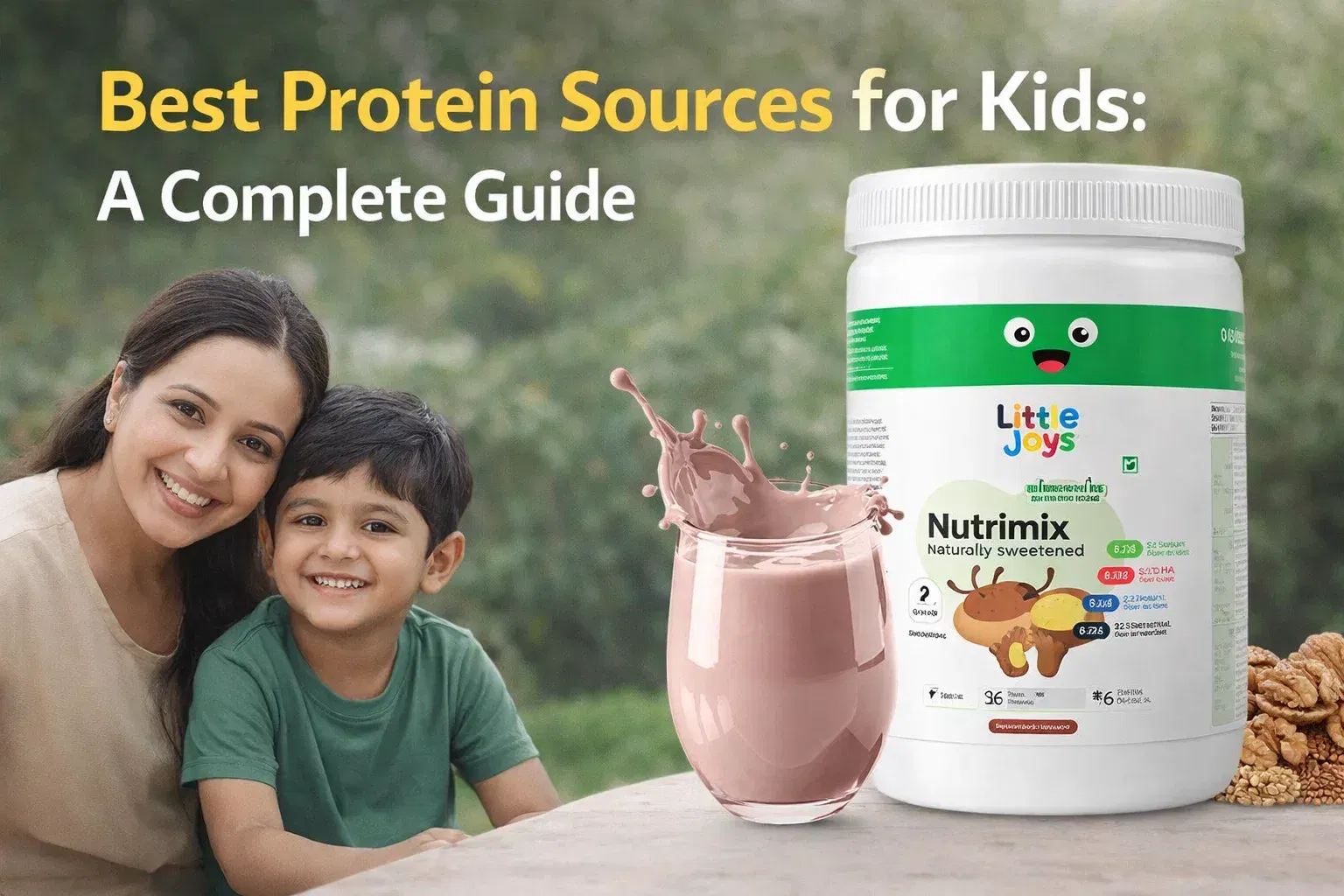
Protein is the most talked-about nutrient in child nutrition - and also the most misunderstood. Many parents worry their child is not getting enough, while others assume any food with protein on the label is doing the job.
The reality is more nuanced. Protein quality, completeness, and daily consistency matter as much as total grams consumed.
How Much Protein Does a Child Actually Need?
| Age | Daily Protein Requirement |
|---|---|
| 1-3 years | 13 g |
| 4-8 years | 19 g |
| 9-13 years | 34 g |
| Teen girls | 46 g |
| Teen boys | 52 g |
These are achievable through diet for most children. The challenge is variety - protein from a single source every day does not cover all essential amino acids. A combination of plant and animal sources across the week covers the full amino acid profile that growing children need.
Best Protein Sources for Kids
1. Little Joys NutriMix
For children who are picky eaters, consistently refuse dal or eggs, or eat an extremely limited range of foods, NutriMix is the most reliable daily protein source available in a format children accept.
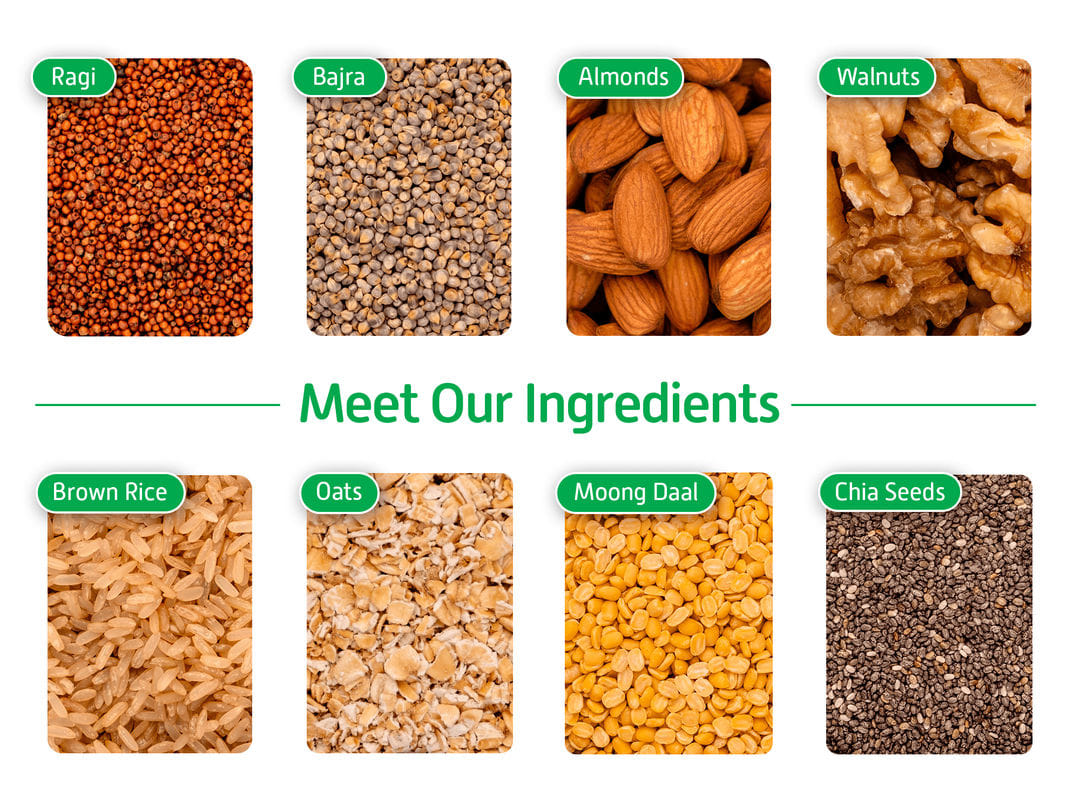
It provides plant-based protein from moong dal, peas, brown rice protein, almonds, and walnuts - a combination that covers a broad amino acid profile without relying on a single source. One serving delivers meaningful protein alongside calcium, iron, zinc, and 23 vitamins and minerals. No refined sugar, whole grain base of ragi and bajra, GMP certified.
This is the first pick specifically because it solves the real-world problem: children who need protein but won't eat the foods that contain it.
2. Eggs
The most complete single animal protein available and one of the most cost-effective. One egg provides approximately 6g of protein with all nine essential amino acids, plus Vitamin D, B12, zinc, and iron. For Indian families, eggs are also one of the most accepted foods across age groups.
One egg daily for children aged 2 and above is a straightforward, high-impact nutritional habit.
3. Dal (Lentils and Legumes)
Moong, masoor, chana, rajma, and toor dal are the backbone of Indian child nutrition. Together they provide plant protein, iron, zinc, and dietary fibre. A bowl of cooked dal (roughly 200ml) provides 8-10g of protein.
The key limitation: most plant proteins are incomplete (missing one or more essential amino acids). Dal paired with a grain - rice, roti, or bajra - creates a complementary amino acid profile that covers what either food alone misses.
4. Paneer
A concentrated dairy protein - roughly 18g per 100g - that most Indian children enjoy. Provides calcium and fat alongside protein. Works in sabzis, parathas, snacks, or eaten plain with a little salt. For vegetarian families, paneer is one of the easiest ways to significantly increase daily protein intake.
5. Curd (Dahi)
Around 3-4g of protein per 100g alongside probiotic benefit and calcium. Less dense as a protein source than paneer or eggs, but valuable because it is easily consumed daily in large amounts. A 200g serving of curd at lunch is a consistent, low-resistance protein contribution.
6. Walnuts and Almonds
Around 15-20g of protein per 100g, alongside Omega-3, Vitamin E, and healthy fats. A small handful (10-15g) daily contributes meaningful protein plus brain-supportive fats. Crush into porridge or curd for younger children who cannot chew whole nuts safely.
What to Look for When Choosing a Protein Supplement for Kids
If dietary protein consistently falls short, a supplement or fortified food is the practical gap-closer. When evaluating options:
- Whole food protein source - dal, legumes, or nuts, not just isolated whey or soy
- Complete amino acid profile - from a combination of sources, not one alone
- Zero refined sugar - especially for a product given daily
- Age-appropriate serving size - adult protein supplements are not suitable for children under 12
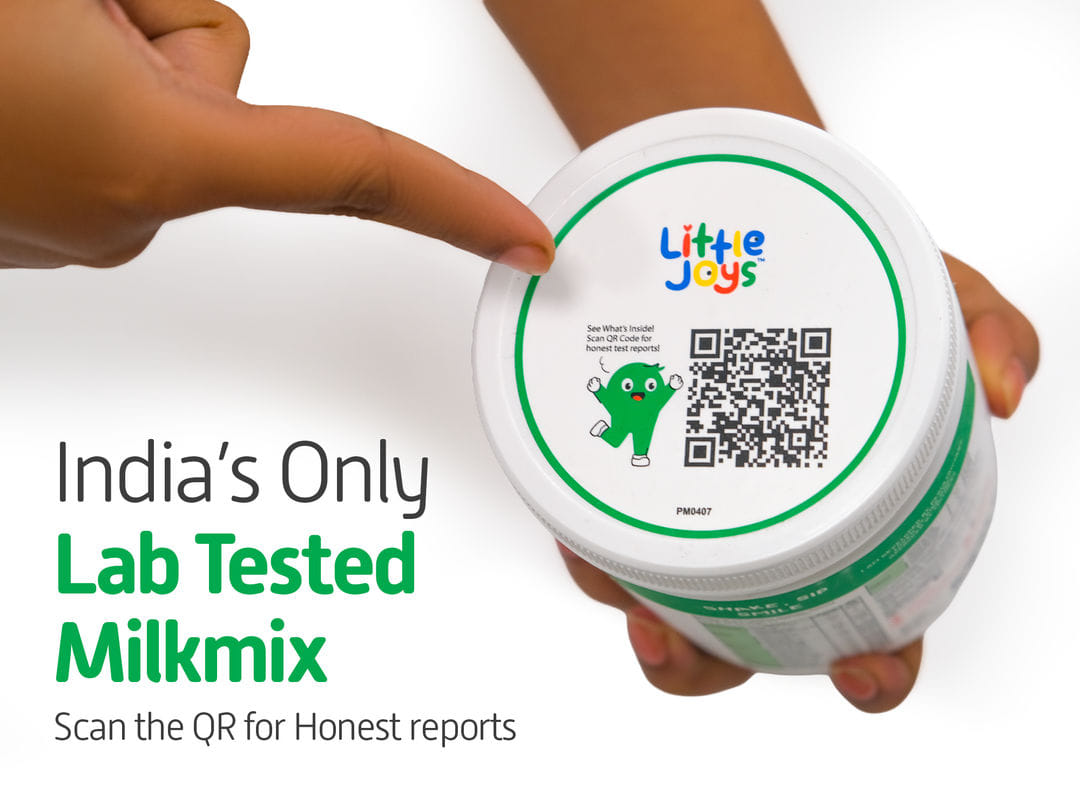
- Third-party tested - verifies actual protein content matches the label
FAQ
Q: Can children get enough protein from a fully plant-based diet?
Yes - with varied sources. Dal + grain at most meals, nuts, curd, and paneer together cover daily protein and amino acid needs for most children. The key is variety, not volume.
Q: Is too much protein harmful for children?
Consistently very high protein intake (well above daily requirements) can put pressure on developing kidneys. Age-appropriate amounts from whole food sources are not a concern. Avoid high-dose protein powders designed for adult athletes.
Q: How do I know if my child is getting enough protein?
Adequate growth for age, good energy, and normal appetite are the best indicators. Signs of low protein intake include slow wound healing, persistent fatigue, and reduced muscle tone.