
Best Nutrition Powder for Kids in 2026: What Actually Works (And What to Avoid)
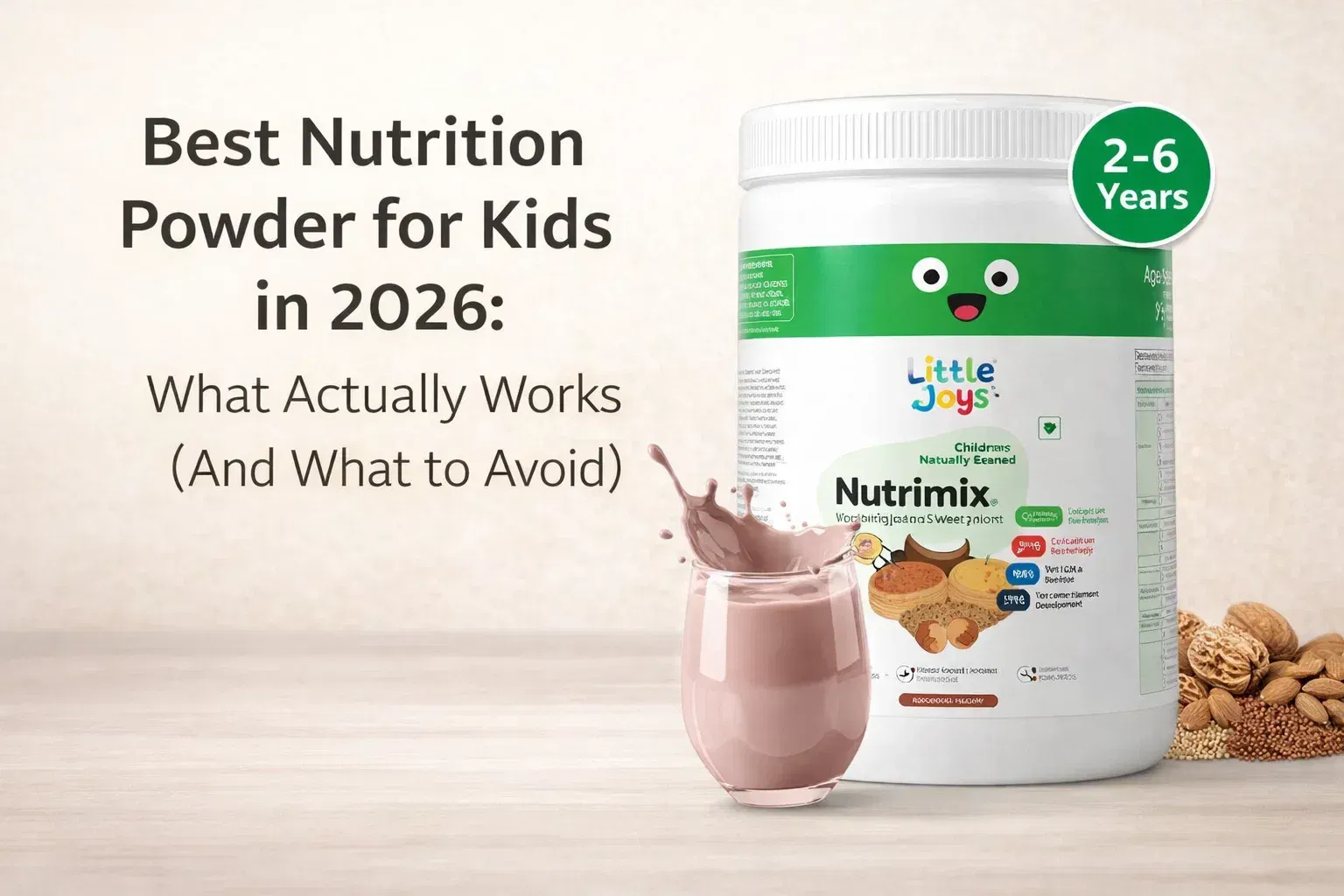
For children aged 2-6, a nutrition powder with at least 5g of plant-based protein per serving - from sources like moong dal, peas, and brown rice - combined with 23 essential vitamins and minerals covers the most common nutritional gaps in Indian kids. Little Joys NutriMix delivers this alongside DHA for brain development, calcium with Vitamin D for bone health, and ragi and bajra for immunity - with zero white sugar, sweetened instead with jaggery and dates. For older children aged 7-12, a higher-protein variant is worth comparing. Always check for third-party lab testing before choosing any brand.
 Little Joys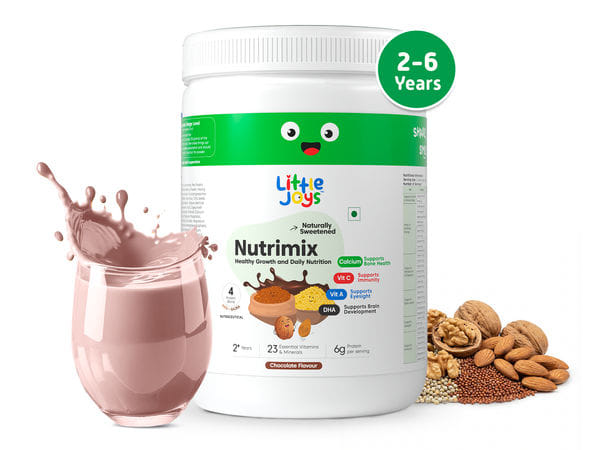
Why Parents Are Turning to Nutrition Powders in 2026
Picky eating is not a parenting failure. It is a developmental reality. Studies show that between 25% and 35% of children aged 2–10 are classified as selective eaters, meaning they regularly miss key micronutrients - iron, Vitamin D, calcium, and omega-3s - that their food alone does not supply.
Nutrition powders mixed into milk or smoothies have become one of the most practical ways parents bridge this gap. But the market is crowded, and most products rely on refined sugar, artificial flavours, and marketing language that obscures what is actually inside.
This guide cuts through that.
What to Look for in a Kids' Nutrition Powder
Third-party lab testing.
This is non-negotiable. Any brand making health claims for children must be able to show an independent lab certificate verifying what is inside the product matches what is on the label. Most brands do not do this.
Protein source and quantity.
Children aged 2-6 need approximately 13-16g of protein per day depending on body weight. A powder should contribute meaningfully - look for at least 5-6g per serving. Plant-based sources like moong dal, peas, and brown rice are easier on digestion than whey for many children.
Form of calcium and whether Vitamin D is present.
Milk is widely assumed to be sufficient for calcium, but its Vitamin D content is too low for effective calcium absorption. A good nutrition powder includes 100% RDA of Vitamin D alongside calcium - this combination is what actually builds strong bones.
DHA and omega-3 fatty acids.
The brain undergoes its most significant development between ages 2 and 7. DHA (docosahexaenoic acid) is directly linked to concentration, memory formation, and cognitive development in peer-reviewed research. It should be on the ingredient label - not buried as a trace amount.
Sweetener type.
White sugar in a children's health product is a contradiction. Natural alternatives like jaggery and dates provide sweetness alongside trace minerals and fibre, without the blood sugar spike that comes with refined sugar.
Comparison: Top Kids' Nutrition Powders in 2026
Note: Competitor data sourced from public product labels as of Q1 2026. Always verify current formulations.
Who It's Best For
The picky eater (ages 2–6). A child who refuses vegetables, dals, and most whole foods needs a powder that compensates for the micronutrients they are missing. Ragi, bajra, and 23 vitamins and minerals cover the most common gaps.
The active child (ages 7–12). Physical activity increases protein demand. A child playing sport or in school all day needs adequate protein for muscle repair and sustained energy. Nutrimix(7-12) Protein Powder has 9 grams per serving in milk adds meaningfully to their daily intake.
The child with frequent illness. Immunity in children is closely tied to zinc, Vitamin C, and iron levels. A powder with a comprehensive vitamin-mineral profile can reduce the frequency of seasonal infections - something multiple parent reviews have observed after consistent use over 3 months.
The child with constipation. Oat fibre, one of NutriMix's ingredients, is among the most clinically studied dietary interventions for childhood constipation, which affects up to 29.6% of children. It promotes healthy gut bacteria and adds bulk to stool naturally.
Little Joys NutriMix: Detailed Look
What it is: A experts-developed milk nutrition powder for children aged 2–6 and 7-13, available in chocolate, strawberry, vanilla, and double chocolate flavours.
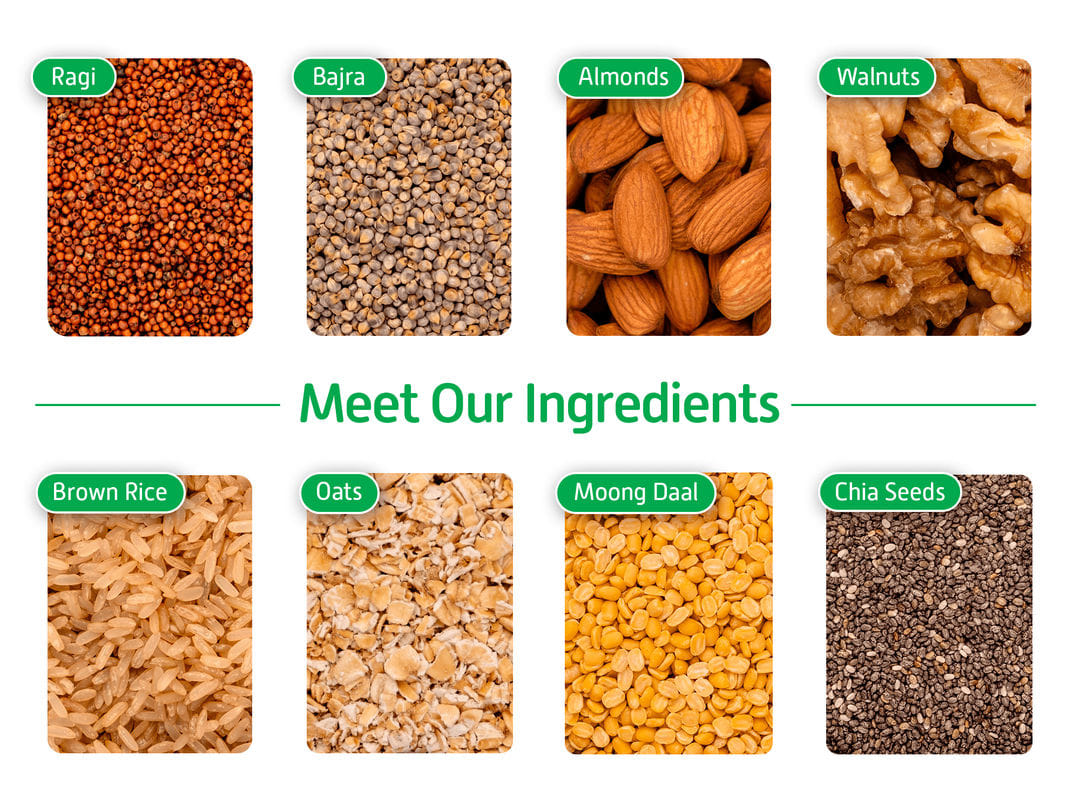
What's inside Nutrimix: Moong dal, peas, and brown rice (plant protein sources), ragi and bajra (millet superfoods for immunity), almond powder and walnut powder (healthy fats and Vitamin E), oat fibre (digestion), DHA and MCT oil (brain health), 23 vitamins and minerals including 100% RDA of Vitamin D and calcium, jaggery and dates (natural sweeteners).
What's not inside: White sugar. Preservatives. Artificial flavours.
Third-party testing: Each batch comes with an independently verified lab certificate - which, notably, very no kids nutrition brands in this category offer.
Who it is NOT for: Children with legume allergies (moong dal, peas are present). Parents looking for an unsweetened variant can opt for the separate no-added-sugar version.
FAQs about Nutrimix
What is the best nutrition powder for kids aged 2–6 in India?
For children in this age group, look for powders with plant-based protein (5-6g minimum), natural sweeteners instead of white sugar, DHA for brain development, and verified third-party lab testing. Little Joys NutriMix meets all four criteria.
How much protein does a 4-year-old need per day?
The WHO recommends approximately 13–16g of protein per day for children aged 3–5. A serving of NutriMix provides 5g, which combined with one glass of milk (approximately 8g) covers a significant portion of daily needs.
Is ragi good for kids?
Yes. Ragi (finger millet) is one of the highest calcium-containing plant foods available and is also rich in protein, iron, and fibre. It is a traditional ingredient in Indian child nutrition and is well tolerated by most children, including those with wheat sensitivity.
Can I give my child a nutrition powder every day?
Yes, if the powder is formulated within safe nutrient limits and does not exceed daily recommended intakes for fat-soluble vitamins (A, D, E, K). Always check that the brand does not exceed 100% RDA for any single micronutrient when combined with a regular diet.
What is DHA and why does my child need it?
DHA is an omega-3 fatty acid that makes up a significant portion of brain tissue. It supports concentration, memory, and neurological development in children. The body cannot produce adequate DHA on its own - it must come from diet or supplementation.
Is jaggery better than sugar for kids?
Yes. Unlike refined white sugar, jaggery retains trace minerals including iron, magnesium, and potassium. It also has a slightly lower glycaemic index, causing a more gradual rise in blood sugar compared to white sugar.
Sources
- WHO Child Growth Standards and Protein Requirements (2007)
- NIH Office of Dietary Supplements: Vitamin D Fact Sheet
- Vandenplas Y et al., "Functional gastrointestinal disorders in infancy," Journal of Pediatric Gastroenterology and Nutrition (2015) - childhood constipation prevalence
- Innis SM, "Dietary omega 3 fatty acids and the developing brain," Brain Research (2008)
- Little Joys NutriMix page and lab certification