
Best Healthy Snacks for Kids in India 2026
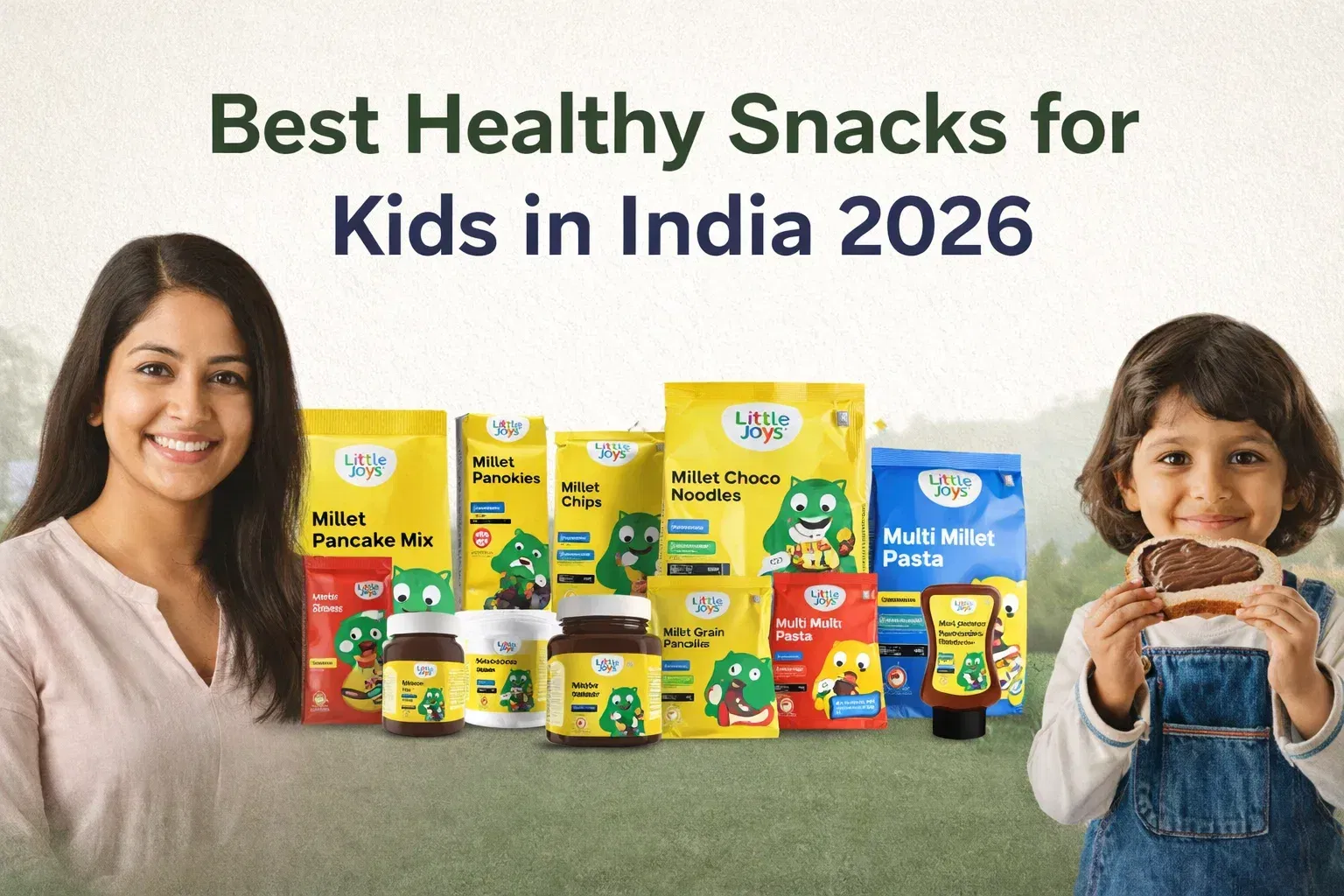
The best healthy snack for a child is one they will actually eat. That constraint narrows the field considerably - but there are genuinely nutritious options that children accept well. The ones worth prioritising replace refined wheat and sugar with whole grains, natural sweeteners, and real food ingredients.
Little Joys Millet Choco-Chip Banana Pancake Mix leads this list - ragi and bajra base, zero refined flour, no added sugar, ready in minutes. One of the few millet snack formats children accept without resistance.
-> View Little Joys Millet Pancake Mix
 Little Joys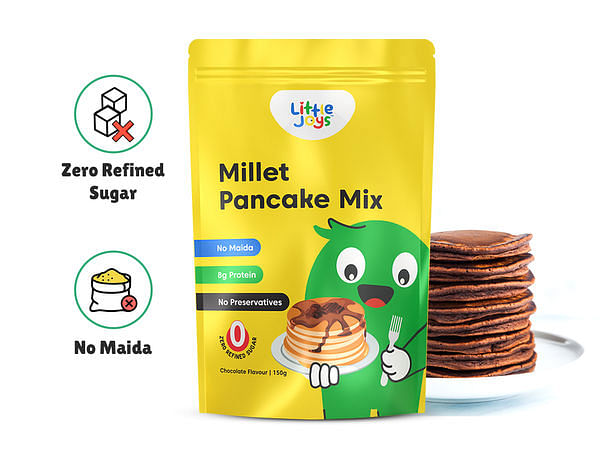
What Makes a Snack Actually Healthy for Children
Whole grain base (not refined flour)
Most packaged children's snacks in India use maida or refined wheat as the primary ingredient. This provides calories with no fibre, minimal minerals, and a high glycaemic response that causes energy crashes within an hour. Ragi and bajra provide fibre, iron, calcium, and zinc alongside energy - the same calories with a nutritional return.
Zero or minimal added sugar
Snacks sweetened with jaggery or dates are meaningfully better than refined sugar equivalents - providing trace minerals and a lower glycaemic response alongside sweetness. Snacks with no added sweetener at all (savoury millet options, nuts, plain curd) are better still.
Protein anchor
Snacks that include protein - curd, a handful of nuts, moong, or paneer alongside a grain - sustain energy longer and reduce the likelihood of the child being hungry again within 30 minutes.
Best Healthy Snack Options for Indian Children 2026
1. Little Joys Millet Choco-Chip Banana Pancake Mix (Best Commercial Millet Snack)
- Ragi and bajra as the flour base - no refined wheat
- No added sugar - natural sweetness from banana
- No artificial colours or preservatives
- Ready in under 5 minutes
- Widely accepted by children from age 2
-> View Little Joys Millet Pancake Mix
Little Joys2. Homemade Ragi Ladoos
Ragi flour, jaggery, ghee, and a pinch of cardamom. No baking required. Keeps for 5-7 days. One of the most nutritionally complete traditional Indian snacks - providing calcium (ragi), iron (jaggery), healthy fats (ghee), and natural sweetness. Widely accepted by children from age 1 onwards.
3. Curd with Seasonal Fruit
Plain full-fat curd provides protein, calcium, and probiotics alongside the natural sweetness and hydration from fruit. Mango in summer, banana year-round, chiku or guava by season. One of the most practical after-school snacks for children of any age.
4. Almonds and Walnuts Mix
8-10 mixed nuts provide Omega-3, Vitamin E, magnesium, and healthy fats that sustain energy for 2-3 hours. Crushed for children under 4, served whole from age 5. One of the highest-nutrient snacks per gram available.
Little Joys
5. Bajra or Jowar Crackers (homemade or clean-label)
Bajra crackers provide iron, zinc, and fibre without refined flour. With a small amount of curd or nut butter, they provide a protein anchor. Look for products with just bajra/jowar flour, salt, and oil on the label.
Snacks to Limit or Replace
Maida-based biscuits (even those marketed as healthy), packaged fruit juices (concentrated sugar with minimal fibre), flavoured chips, and most commercially packaged children's snack products in India are worth limiting - not because of occasional use, but because daily consumption displaces the nutrient-dense options listed above.
FAQ
Q: How many snacks should a child have per day?
Two snacks per day - mid-morning and after school - is the standard guideline for children ages 2-12. Each snack should be 150-250 calories and include at least one whole food group (grain, dairy, fruit, nut, or legume). Grazing on small processed snacks throughout the day is less beneficial than two structured, nutrient-dense snack times.
Q: Are millet snacks suitable for children under 2?
Yes - ragi has been a traditional weaning food in India from 6 months. Millet-based pancakes and porridges are appropriate for children from 8 months onwards. Whole nuts and hard crackers should be avoided until 4-5 years due to choking risk.