
25 Best Puzzle Games for Kids in 2026
Introduction
There's a moment every parent recognises - a child hunched over a scattered pile of pieces, eyebrows furrowed, completely absorbed. That quiet focus is no accident. Puzzle games for kids are among the most powerful learning tools hiding in plain sight as play.
From a chunky wooden jigsaw on the living room floor to an 8-piece sliding tile challenge on a tablet, puzzles engage children's minds in ways that worksheets and flashcards simply can't replicate. And the best part? Kids actually want to do them.
Whether you're looking for something fun for a toddler on a rainy afternoon, a brain-building activity for a school-age child, or an educational game that sneaks in some maths and language practice, this guide has you covered.
We've broken down 25 of the best puzzle games for children by age group, type, and learning goal - so you can find the right fit fast.
Why Puzzle Play Matters More Than You Think
Before we dive into the list, a quick word on why these games deserve a regular spot in your child's routine.
Research published in Psychological Science found that children who played with puzzles, blocks, and board games more than six times a week showed significantly higher spatial reasoning scores than peers who rarely engaged with these activities. Spatial reasoning, in turn, is a strong predictor of success in STEM subjects.
The benefits don't stop there. Regular puzzle play has been linked to:
- Stronger fine motor skills - manipulating pieces builds grip strength and hand-eye coordination
- Longer attention spans - puzzles require sustained focus, which transfers to classroom learning
- Better problem-solving habits - kids learn to try, fail, adjust, and try again
- Early maths thinking - categorising shapes, predicting fits, and spotting patterns are foundational geometry skills
- Emotional resilience - completing a hard puzzle builds genuine confidence
Puzzle Games for Toddlers (Ages 2–4)
At this stage, the goal isn't complexity - it's exploration. Large pieces, bright colours, and familiar subjects (animals, vehicles, food) help little ones build confidence while developing grip strength and shape recognition.
1. Wooden Peg Puzzles
Best for: Fine motor development | Pieces: 4–8
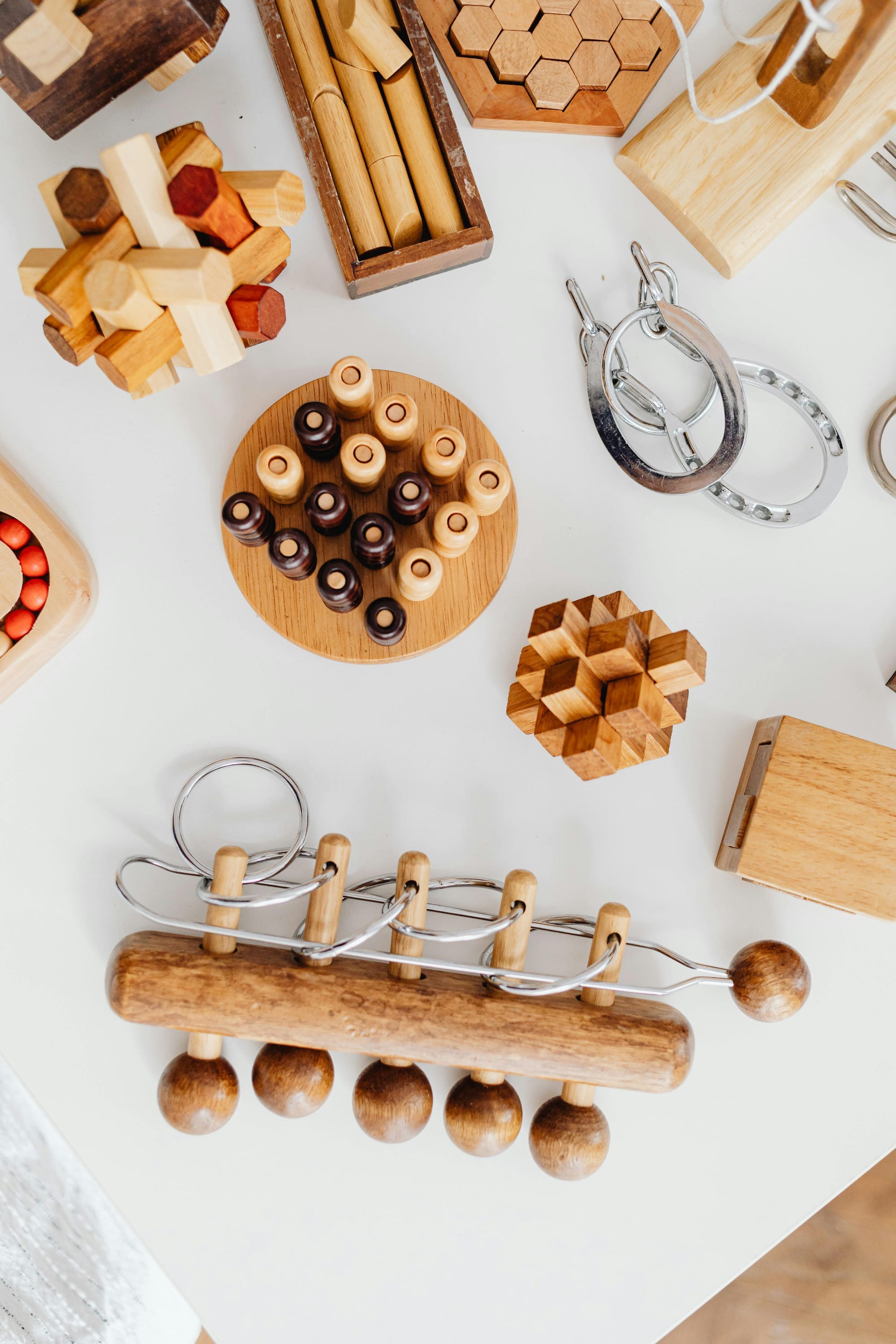
These are often a child's very first puzzle. Each piece has a peg or knob for easy gripping, and the chunky shapes reward young fingers immediately. Look for animal-themed versions with realistic images underneath each piece - the visual cue helps toddlers self-correct.
Learning goal: Hand-eye coordination, shape and object recognition
2. Foam Floor Puzzles
Best for: Gross motor play and spatial awareness | Pieces: 9–16
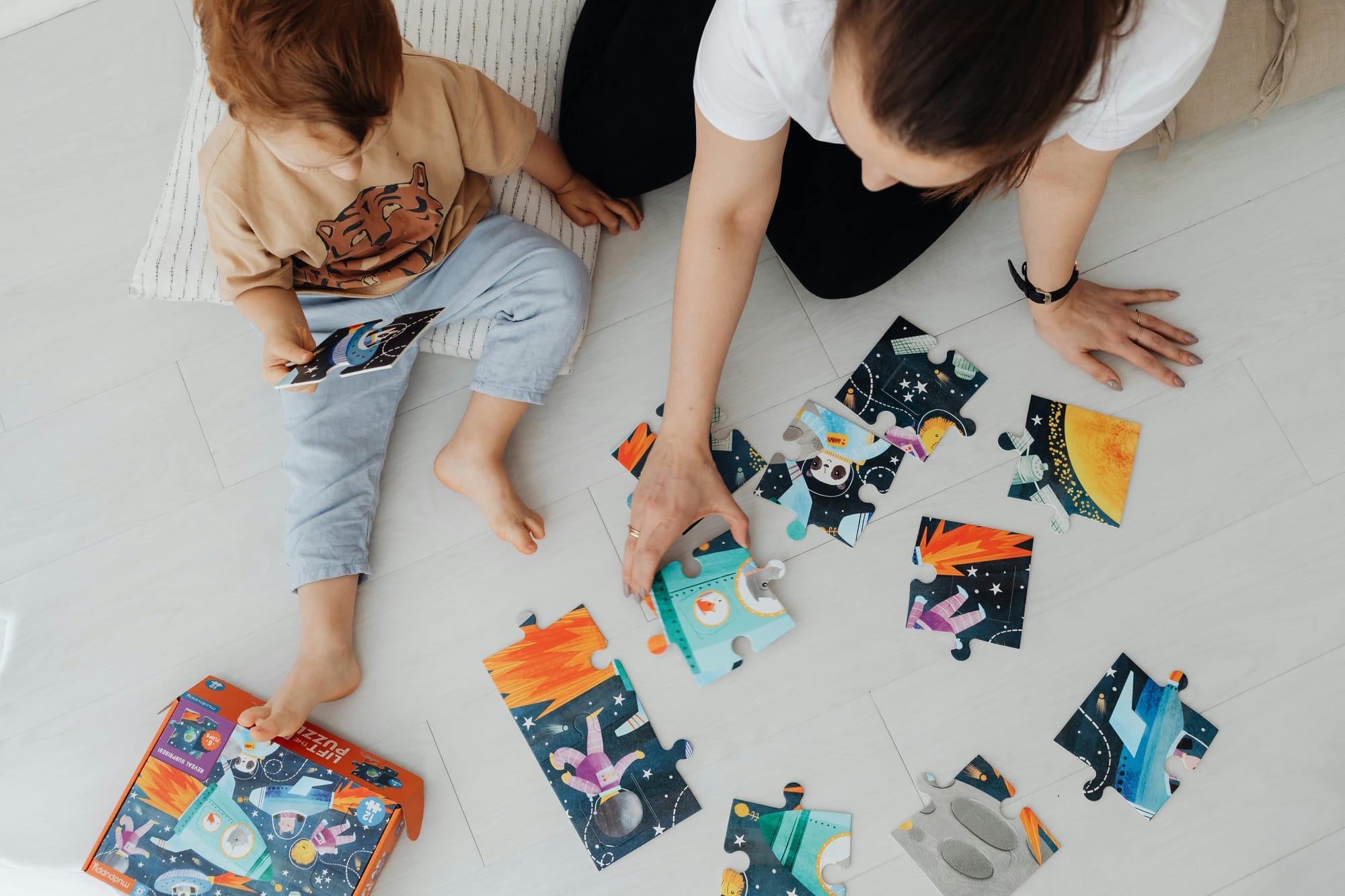
Large interlocking foam tiles - often shaped like the alphabet, numbers, or animals - are perfect for little ones who learn through their whole body. Children step on them, carry them, and rearrange them, all while absorbing letter shapes and number forms.
Learning goal: Gross motor skills, early literacy, number recognition
3. Beginner Jigsaw Puzzles (6–12 Pieces)
Best for: Persistence and spatial thinking | Pieces: 6-12
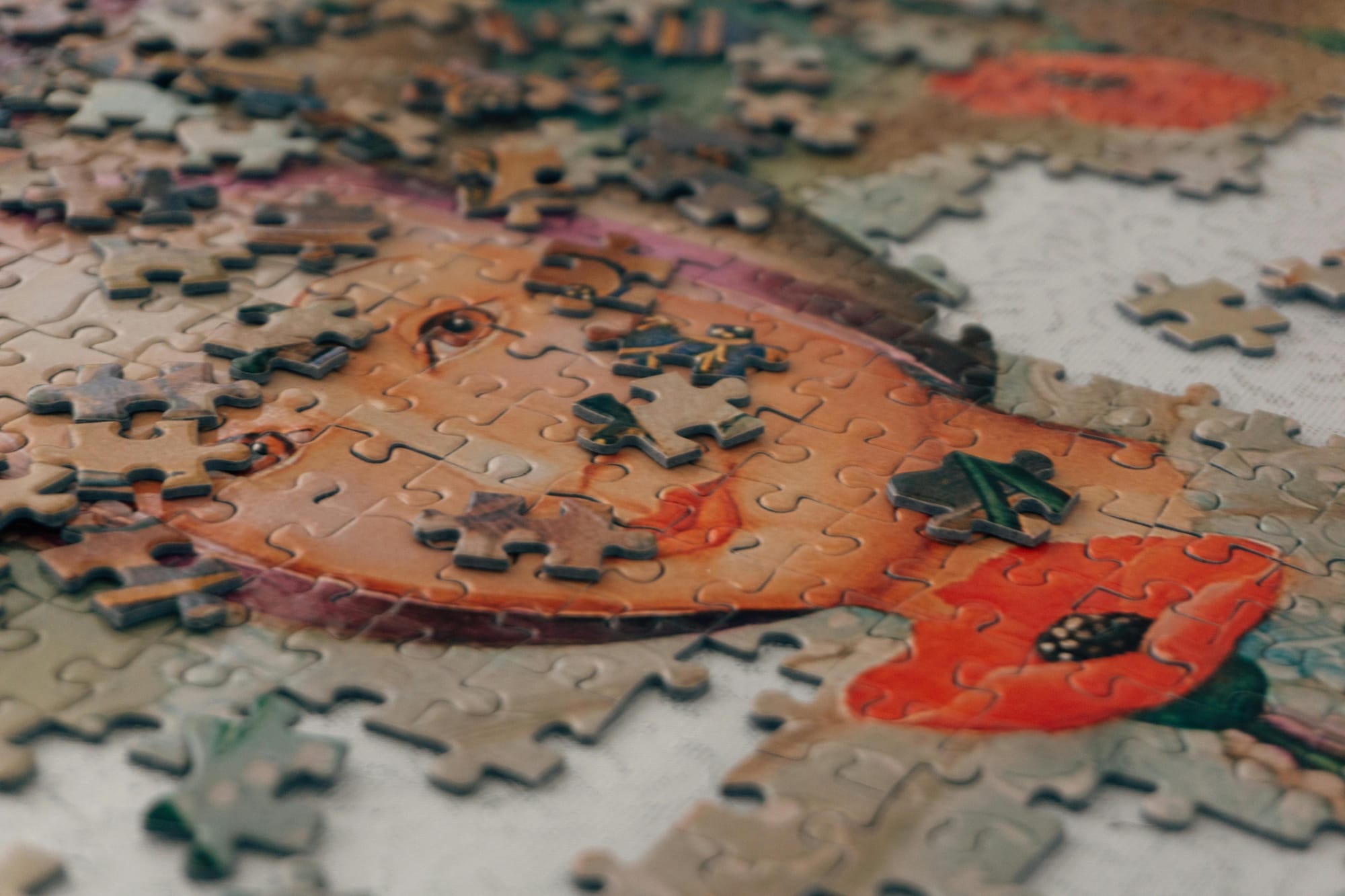
These classic cardboard jigsaws with oversized pieces introduce children to the core puzzle-solving loop: look, think, try, adjust. Choose puzzles that feature something your toddler loves - dinosaurs, trucks, a favourite cartoon character - to keep motivation high.
Learning goal: Spatial reasoning, attention span, persistence
4. Shape-Sorting Toys
Best for: Toddlers 18 months+ | Pieces: 4-8 shapes
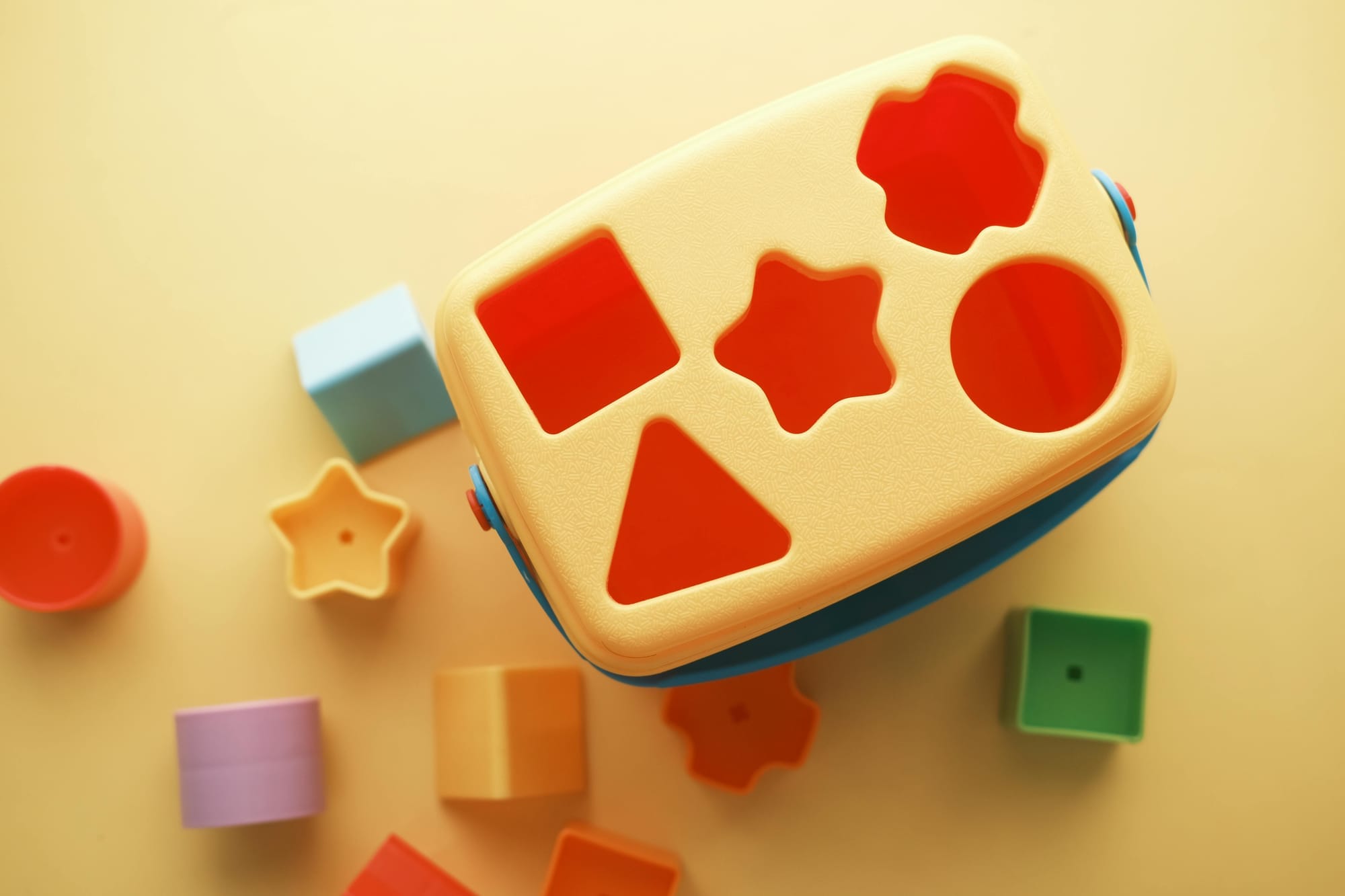
Technically a puzzle in disguise, shape sorters require children to rotate and match 3D forms to corresponding slots. This is foundational geometry, and it's happening through play.
Learning goal: Shape recognition, cause-and-effect thinking, motor coordination
5. Knob Puzzle Boards (Numbers & Alphabet)
Best for: Early literacy and numeracy | Pieces: 10-26
Puzzle boards with letter or number pieces introduce children to abstract symbols in a tactile, memorable way. Tracing the outline of an "A" with their finger while placing it in position creates a stronger memory connection than flashcards alone.
Learning goal: Letter and number recognition, fine motor skills
Puzzle Games for Early Learners (Ages 4–7)
Children in this bracket are ready for more complexity. Piece counts can jump, themes can get more detailed, and you can start introducing logic elements - mazes, matching pairs, and sequencing games.
6. Jigsaw Puzzles (24–100 Pieces)
Best for: Sustained focus and planning | Pieces: 24–100
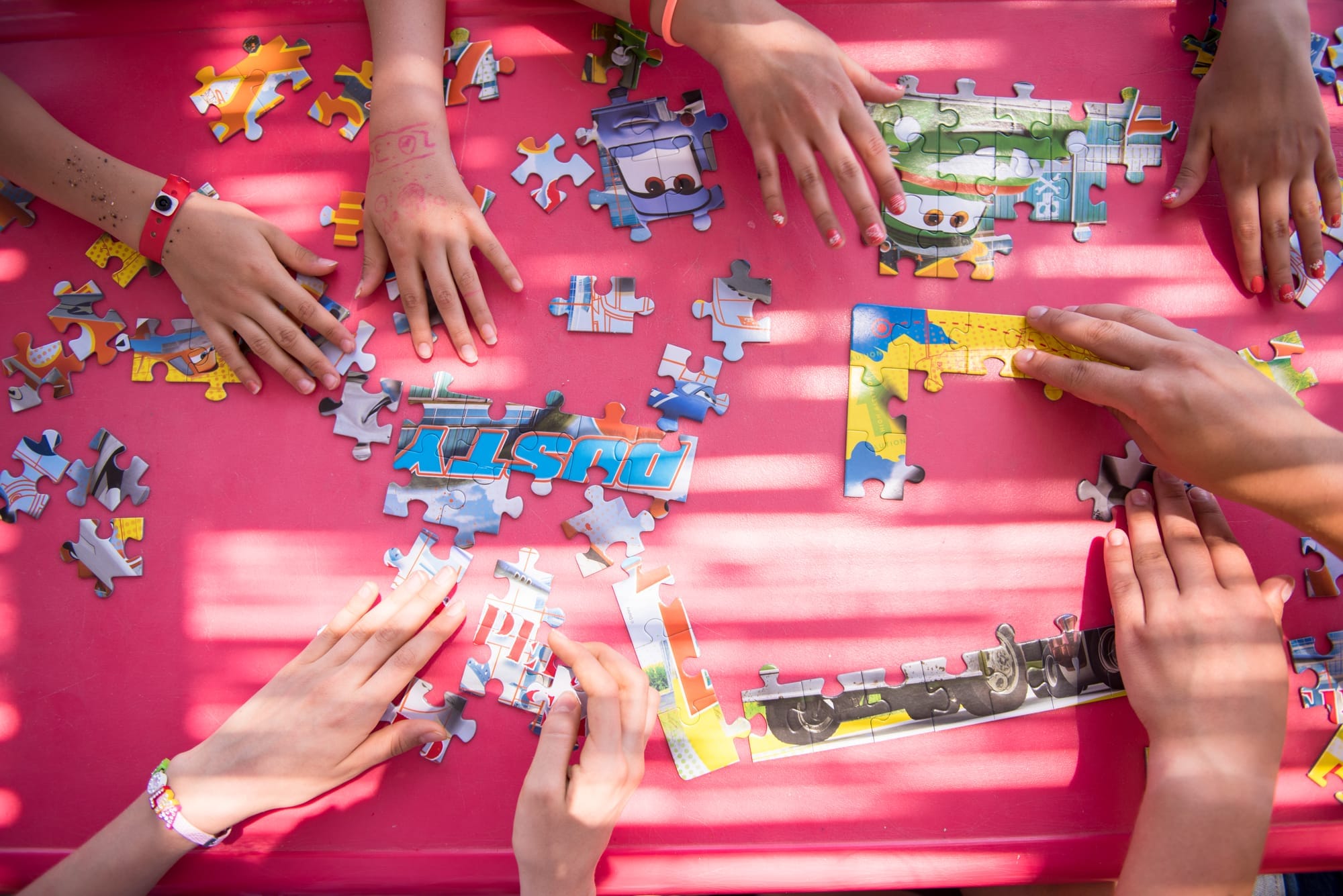
This is when jigsaws really start building serious cognitive muscle. Children learn to sort by colour and edge, work systematically, and manage the frustration of not finding the right piece immediately. All of these are life skills.
Learning goal: Strategic thinking, perseverance, visual perception
7. Memory Match Games
Best for: Working memory and concentration | Cards: 20-40
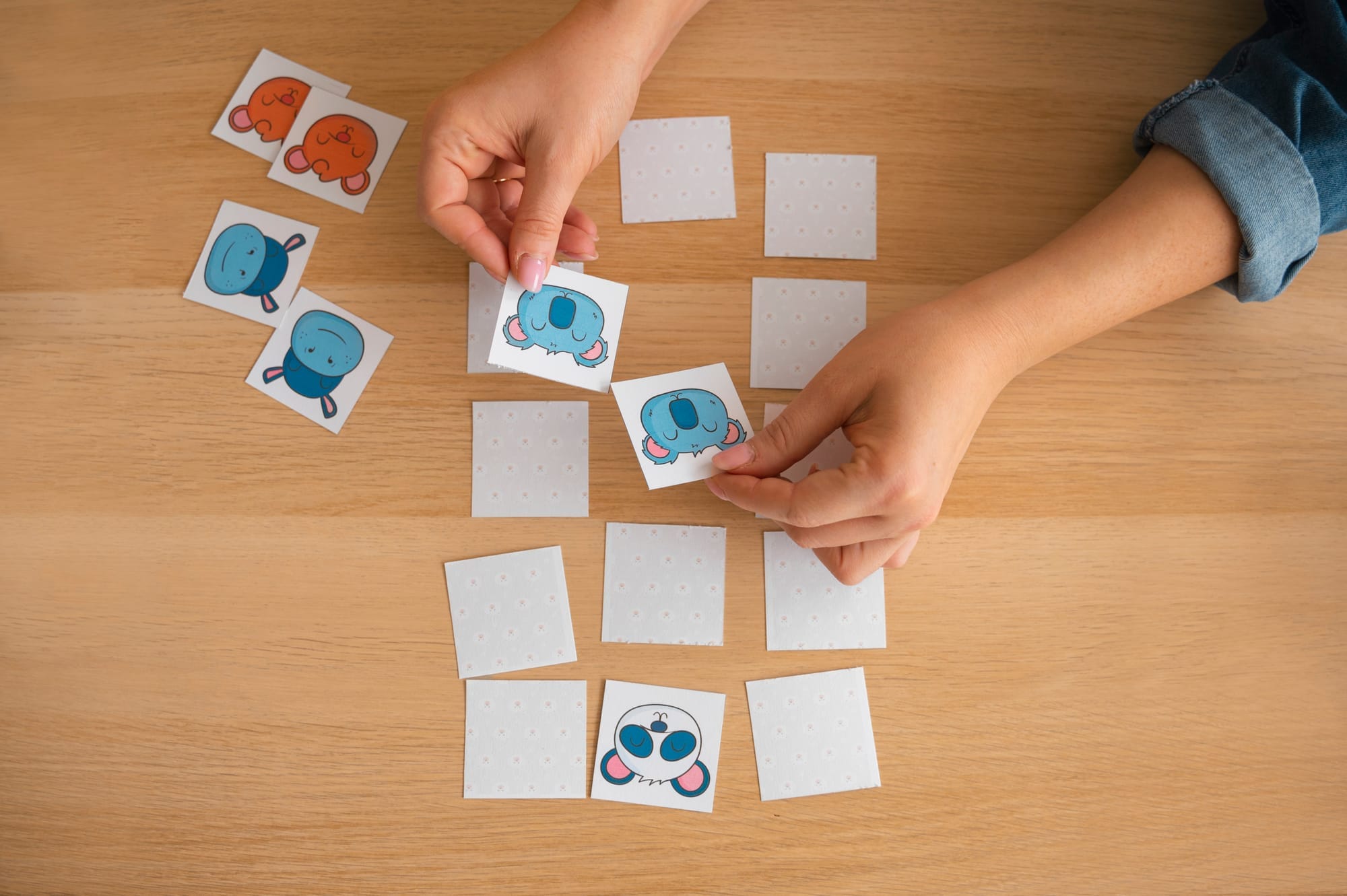
Flip two cards, try to find the matching pair, remember where unmatched cards were. Memory Match is deceptively simple and deeply effective. It builds the kind of working memory that helps children retain information in school.
Learning goal: Memory, concentration, visual recognition
8. Maze Puzzles (Paper and Digital)
Best for: Spatial reasoning and planning ahead | Difficulty: Beginner–Intermediate
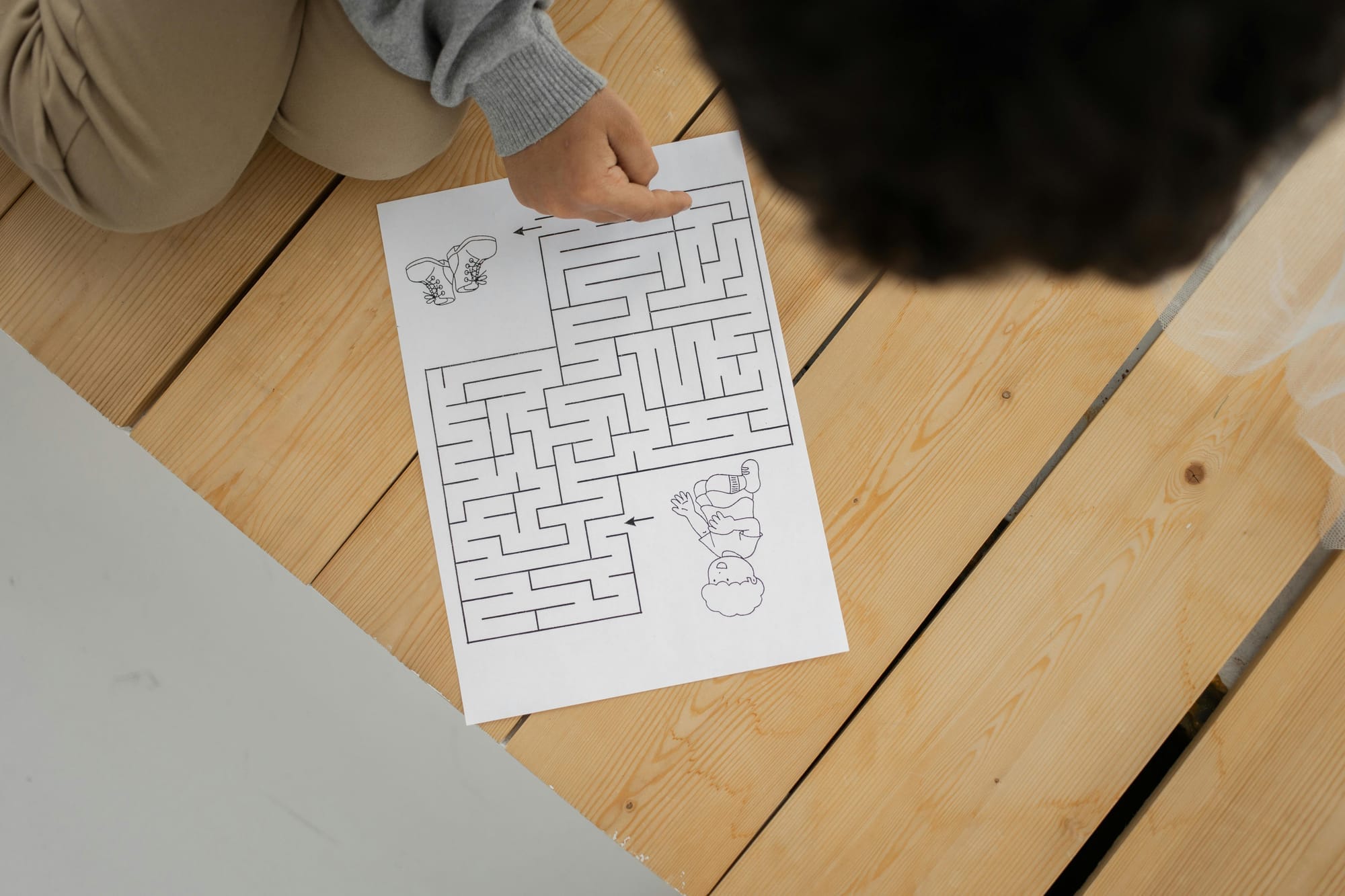
Whether printed on a page or displayed on a screen, mazes ask children to mentally trace a path before committing to a direction. This planning-ahead skill is directly linked to executive function - one of the strongest predictors of academic success.
Learning goal: Spatial reasoning, planning, executive function
9. Matching and Sorting Card Games
Best for: Classification and logical thinking | Cards: 20–40
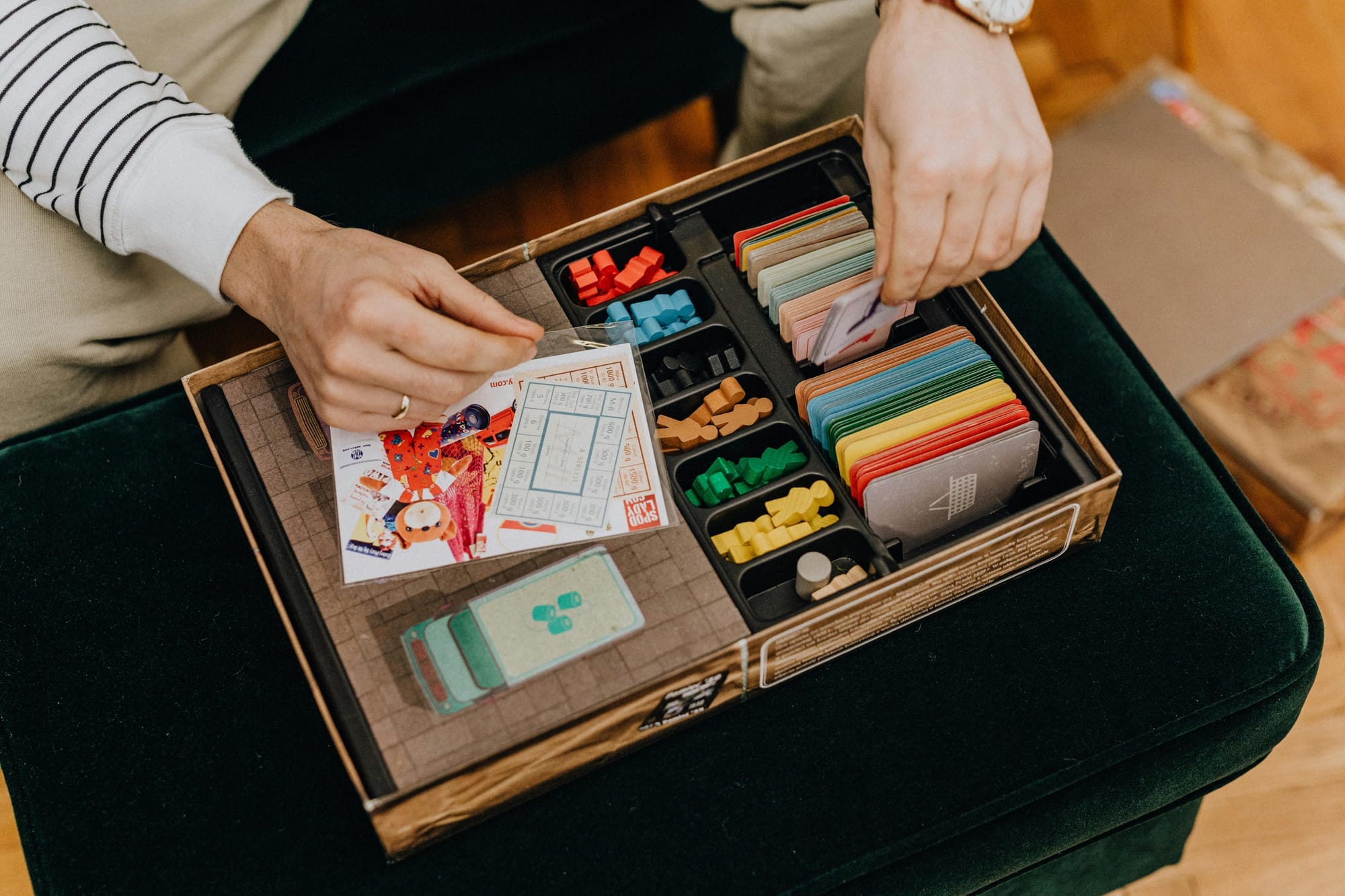
Games that ask children to sort animals by habitat, match cause to effect, or group objects by category are quietly teaching classification logic - the same thinking behind early science and maths.
Learning goal: Classification, logical thinking, vocabulary
10. Simple Tangrams
Best for: Geometry and creative thinking | Pieces: 7
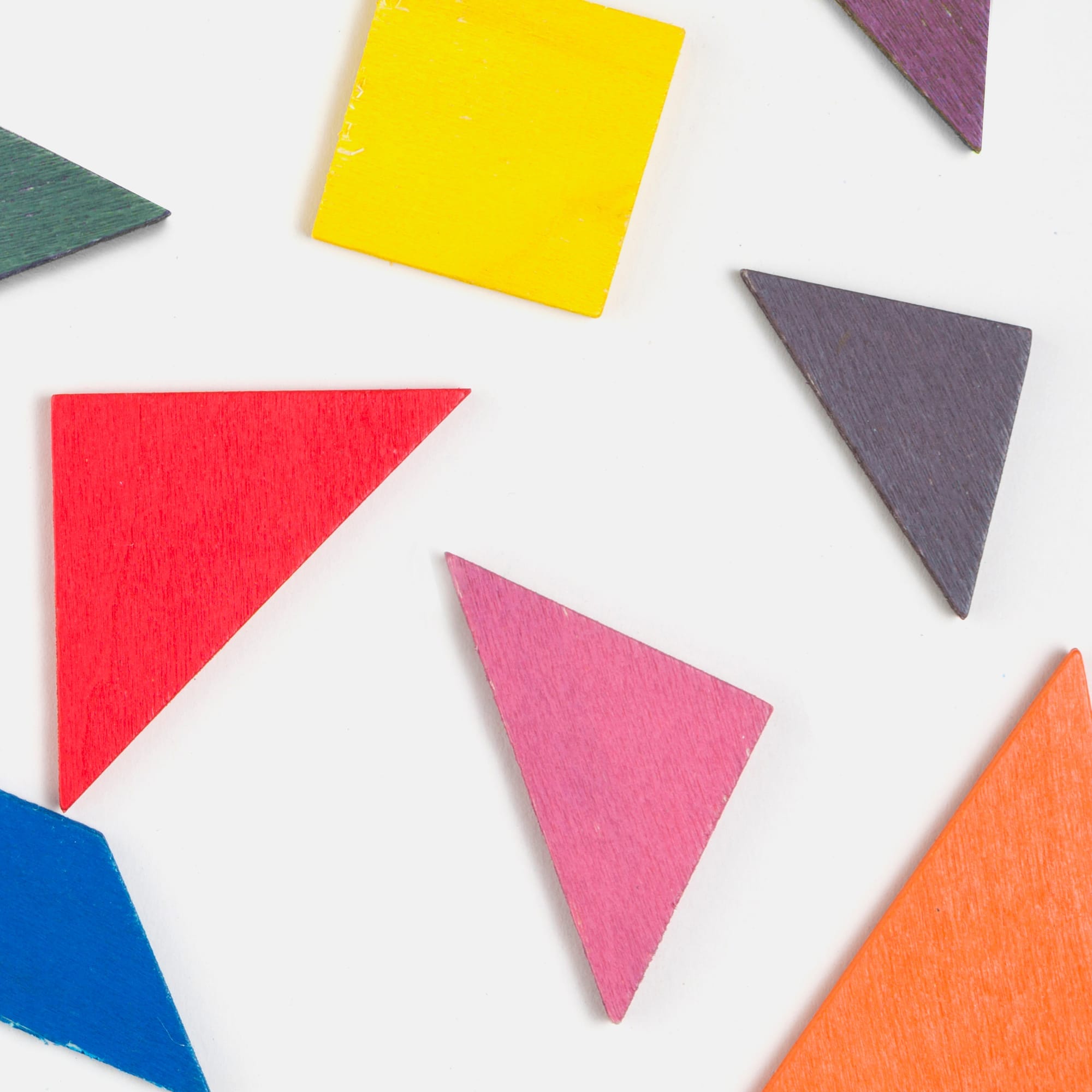
The ancient Chinese tangram - seven geometric pieces that combine to form hundreds of shapes - is a brilliant bridge between play and geometry. Children aged 5 and up can start with guided cards showing silhouettes to recreate, building spatial reasoning with every attempt.
Learning goal: Geometry, spatial thinking, creative problem-solving
11. Sequence Puzzles (Story Ordering)
Best for: Language development and narrative thinking | Cards: 3-6 per story
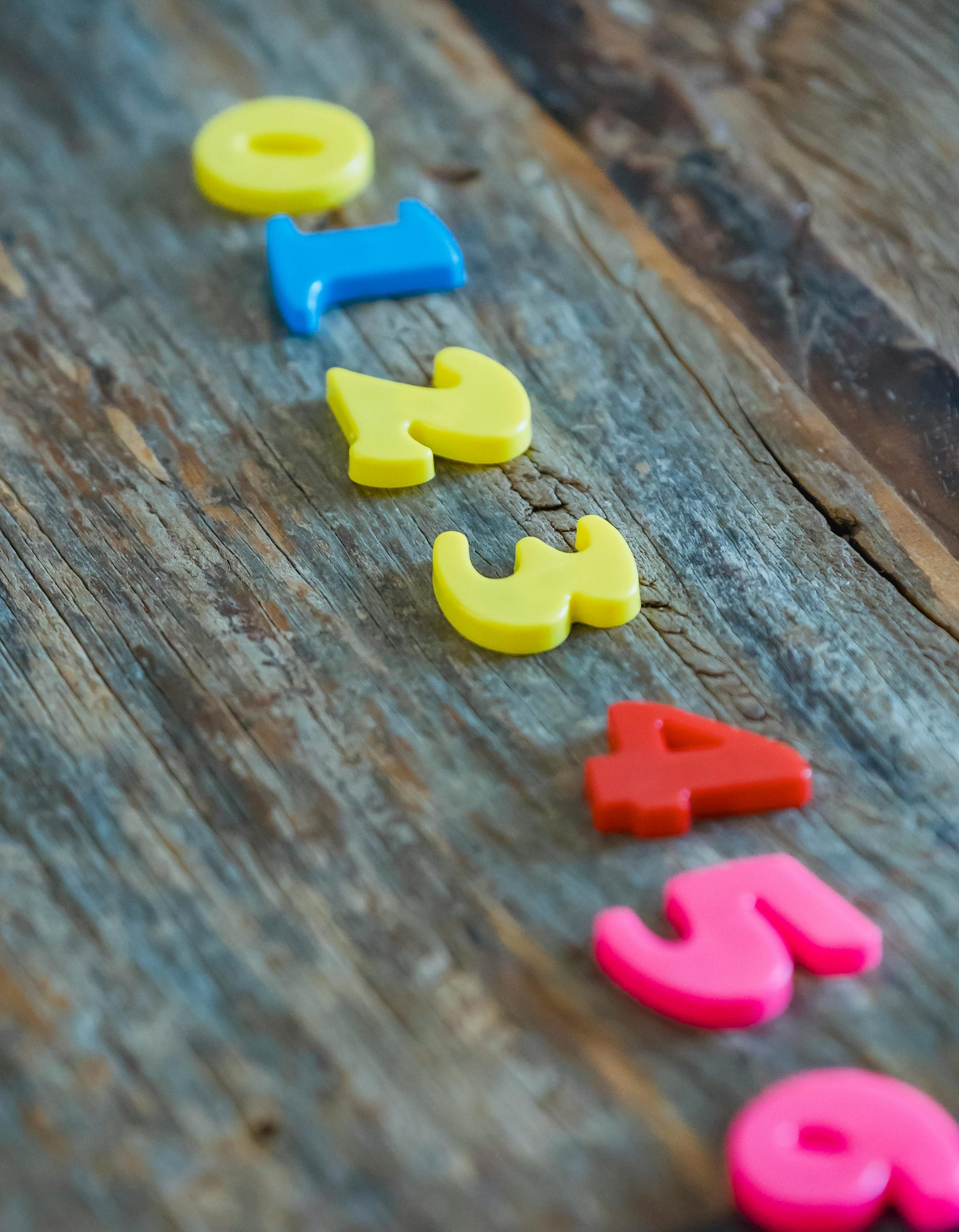
These puzzles show panels of a story out of order, and children must arrange them correctly. They develop sequencing - a skill essential for reading comprehension, mathematical operations, and logical reasoning.
Learning goal: Sequencing, narrative thinking, language skills
12. Peg Board Puzzles
Best for: Pattern recognition and fine motor development
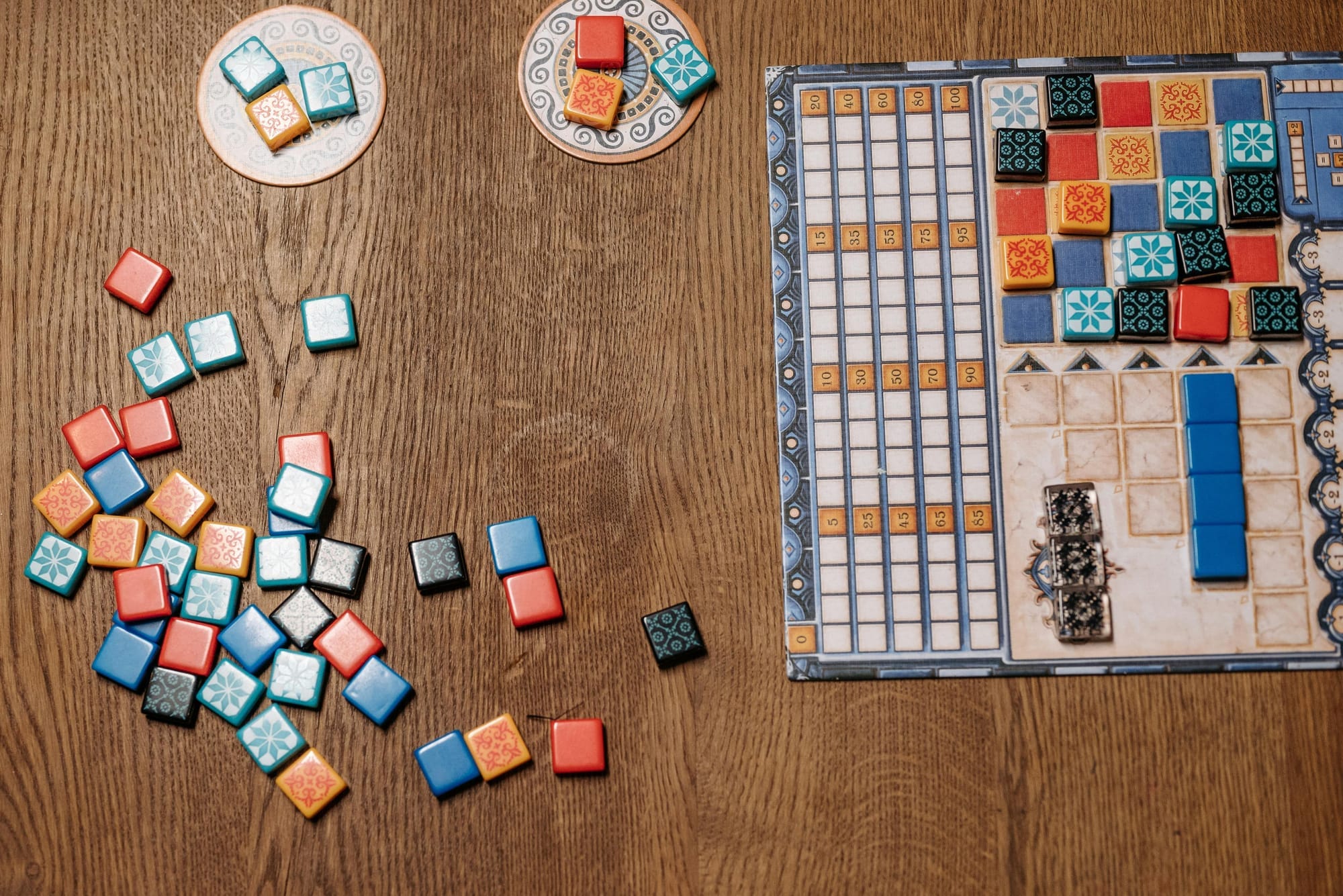
Pegboards ask children to replicate patterns using coloured pegs. This builds pattern recognition, introduces symmetry, and gives hands a workout - all in one quiet activity.
Learning goal: Pattern recognition, fine motor precision, symmetry
Logic and Brain Teasers for Older Kids (Ages 7–12)
Older children are ready for abstract challenges, rule-based games, and puzzles that require multi-step thinking. This is where genuine problem-solving habits really take root.
13. Sliding Tile Puzzles (The 8-Puzzle)
Best for: Logical reasoning and patience | Tiles: 8 or 15
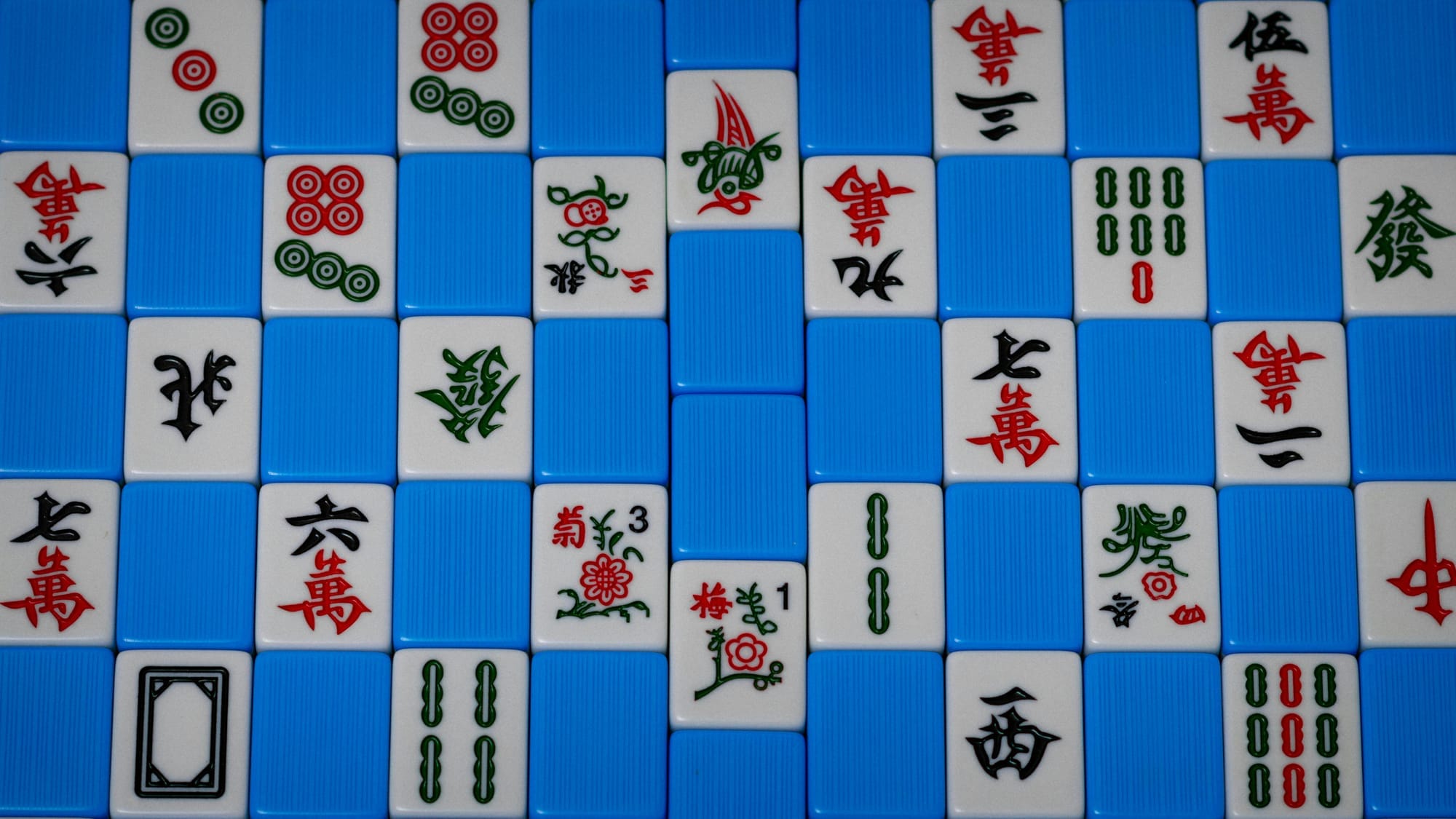
The classic 8-puzzle - eight numbered tiles on a 3×3 grid, one space empty, goal to arrange them in order - is a staple of logical thinking education. It teaches children that some problems require many small moves to reach a solution, and that working backwards from a goal is a valid strategy.
What is an 8 puzzle game? It's a sliding tile challenge where players rearrange scrambled pieces into their correct sequence by sliding tiles into an empty space. There is no picking up pieces - only one legal move at a time. It's deceptively simple and genuinely challenging.
Learning goal: Logical sequencing, backward reasoning, patience
14. Sudoku for Kids
Best for: Number logic and concentration | Grid: 4×4 or 6×6 for beginners
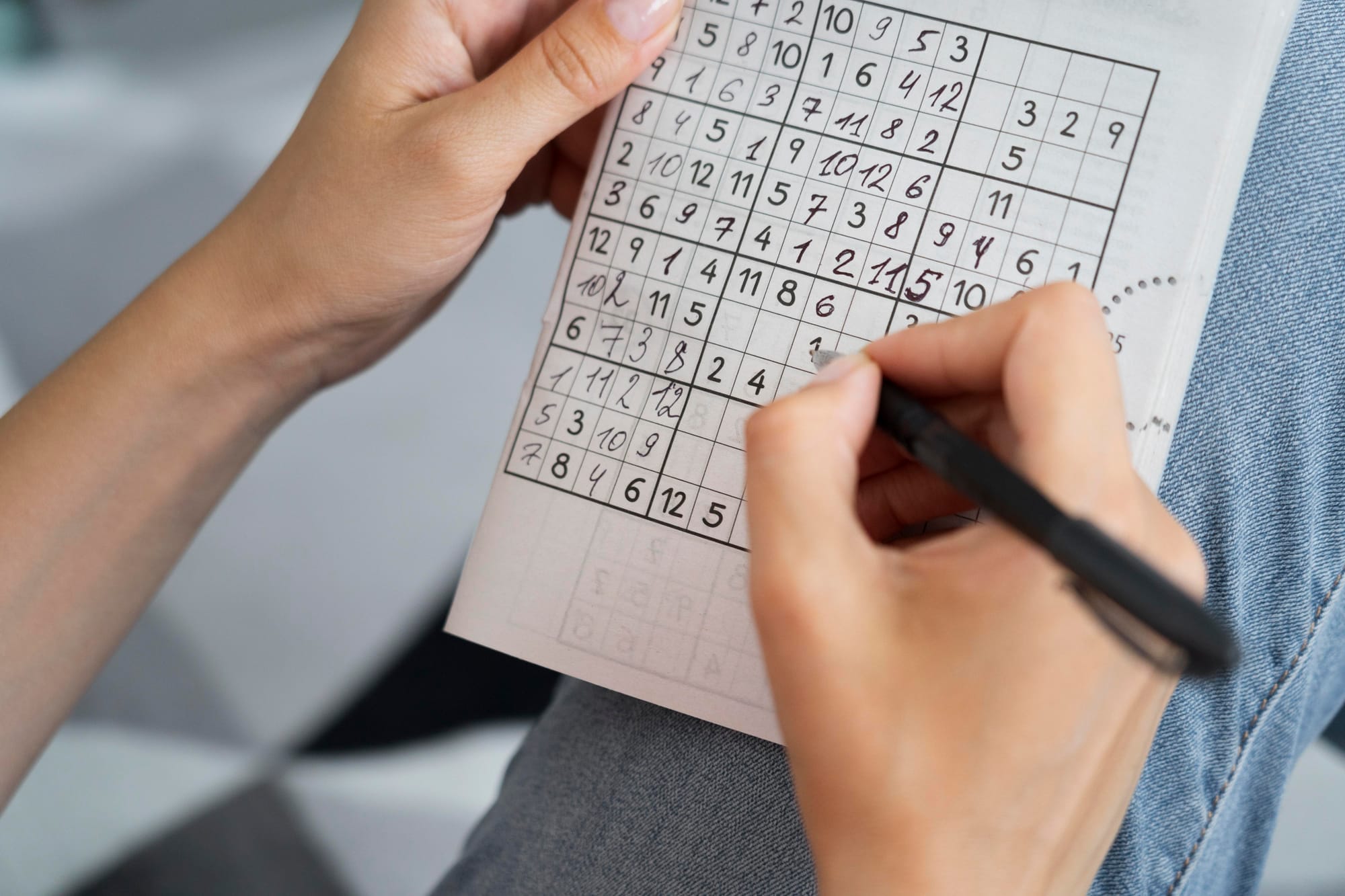
Children's Sudoku uses smaller grids (4×4 rather than the adult 9×9) and teaches the same core logic: each row, column, and box must contain each digit exactly once. No arithmetic required - just sharp thinking.
Learning goal: Logical deduction, concentration, number recognition
15. Word Guessing Games (5-Letter Word Puzzles)
Best for: Vocabulary and deductive reasoning
What is the 5-word guessing game? Games like Wordle - where you have six attempts to guess a five-letter word, using colour-coded feedback after each try - teach elimination logic, vocabulary, and deductive thinking simultaneously. Many kid-friendly versions use simpler word lists, making this accessible from around age 7.
Learning goal: Vocabulary, deductive logic, spelling
16. Logic Grid Puzzles
Best for: Deductive reasoning and systematic thinking | Difficulty: Intermediate
"Five friends each have a different pet. Using the following clues, work out who has which pet." Logic grid puzzles teach children to eliminate impossible options systematically - the same thinking behind formal logic and coding.
Learning goal: Deductive reasoning, systematic thinking, reading comprehension
17. Coding and Pathway Puzzles
Best for: Computational thinking | Age: 6+
Games like those on Toy Theater and Math Playground ask children to sequence instructions to guide a character through a maze. Without writing a line of code, children are learning programming logic: sequences, loops, and conditional thinking.
Learning goal: Computational thinking, sequencing, spatial planning
18. Crossword Puzzles for Kids
Best for: Vocabulary and lateral thinking | Difficulty: Easy–Medium
A well-designed children's crossword - themed around animals, space, food, or history - stretches vocabulary and teaches children to use intersecting information (I know this letter, what word fits?). Great for reluctant readers.
Learning goal: Vocabulary, spelling, lateral thinking
19. Jigsaw Puzzles (100–500 Pieces)
Best for: Long-term focus and strategy | Age: 8+
As piece counts rise, so does the cognitive demand. Children learn to work in zones, sort by colour and texture, build edges first, and manage a project over multiple sessions. These habits translate directly to project-based learning at school.
Learning goal: Strategy, long-term focus, visual-spatial processing
20. Boggle-Style Word Search
Best for: Vocabulary and pattern recognition | Grid: 4×4
Scanning a letter grid for hidden words under time pressure builds scanning speed, spelling pattern recognition, and vocabulary recall. A fast-paced favourite for classrooms and family game nights.
Learning goal: Vocabulary, pattern scanning, spelling
Bonus Picks: Physical Brain Teasers and 3D Puzzles
21. Rubik's Cube (and Variants)
Best for: Ages 8+ | Spatial reasoning and perseverance
The Rubik's Cube remains one of the most effective brain games for children who are ready for a genuine challenge. Beyond the obvious spatial reasoning workout, it teaches that some skills require learning a system - not just random trial and error.
22. Tangram Sets (Advanced)
Best for: Ages 6+ | Geometry and creative thinking
An expanded tangram set with animal and object silhouette cards offers hundreds of hours of geometric exploration. Children who enjoy these often show a natural affinity for geometry and spatial maths.
23. Brainteaser Wooden Puzzles
Best for: Ages 7+ | Logical thinking
Interlocking wooden brainteasers - where the challenge is to disassemble and reassemble a structure - develop the kind of 3D spatial thinking that even many adults find difficult. A wonderful challenge for confident problem-solvers.
24. Checkers
Best for: Ages 5+ | Strategic thinking and turn-taking
Often overlooked as a puzzle-style game, Checkers teaches children to think two or three moves ahead, consider their opponent's options, and manage wins and losses graciously. It's strategy training with low complexity - perfect before introducing Chess.
25. Chess
Best for: Ages 7+ | Advanced strategic thinking
Chess remains the gold standard of strategic board games for children. Research consistently shows that children who learn Chess develop stronger planning, problem-solving, and reading comprehension skills. Start with a children's Chess set and simple rules - full game complexity can come later.
How to Choose the Right Puzzle Game for Your Child
With so many options, picking the right one comes down to three questions:
1. What's the right challenge level? A puzzle too easy gets abandoned quickly. A puzzle too hard leads to frustration and tears. The sweet spot - slightly challenging but achievable - is where real learning happens. As a rule, children should be able to complete the puzzle independently about 80% of the time, with the remaining 20% requiring a bit of effort.
2. What skill do you want to build?
- Fine motor skills → wooden jigsaws, peg boards
- Memory → memory match games
- Language → crosswords, word games, story sequencing
- Maths → Sudoku, tangrams, number puzzles
- Logic → sliding tiles, logic grids, coding games
- Creativity → tangrams, open-ended building puzzles
3. Physical or digital? Both have real value. Physical puzzles build tactile skills and encourage longer focus sessions away from screens. Digital puzzle games offer interactivity, instant feedback, and variety. A healthy balance of both is the ideal approach.
FAQs
What are some fun puzzle games for kids?
Memory match, jigsaw puzzles, Sudoku for kids, Wordle-style word guessing games, tangrams, maze games, and sliding tile puzzles are all widely loved by children. The best one is the one your child will actually sit down to play.
Which game is best for small kids?
For toddlers aged 2-4, wooden peg puzzles and large-piece jigsaws are ideal. They're safe, satisfying, and directly build the fine motor and spatial skills young children need. Foam floor puzzles are also brilliant for active toddlers.
What is the 5-word guessing game?
This refers to word puzzle games - like Wordle - where players must guess a five-letter word in a limited number of tries using colour-coded feedback. It's excellent for building vocabulary and deductive reasoning in children aged 7 and up.
What is an 8 puzzle game?
The 8-puzzle is a classic sliding tile game with eight numbered tiles on a 3×3 grid. Players must slide the tiles into the correct numerical order using the one empty space. It's a foundational computer science puzzle that teaches logical sequencing and multi-step problem solving.
Final Thoughts
Puzzle games for children are not just a way to keep little hands busy. They are one of the most evidence-backed forms of play for cognitive development - building the spatial reasoning, logical thinking, language skills, and emotional resilience that serve children for life.
The best approach is variety: mix physical and digital, combine individual and cooperative play, and rotate the selection regularly to keep young minds engaged and challenged.